How Hot Can Composite Decking Get in Direct Summer Sun, and How Do You Keep It Cool
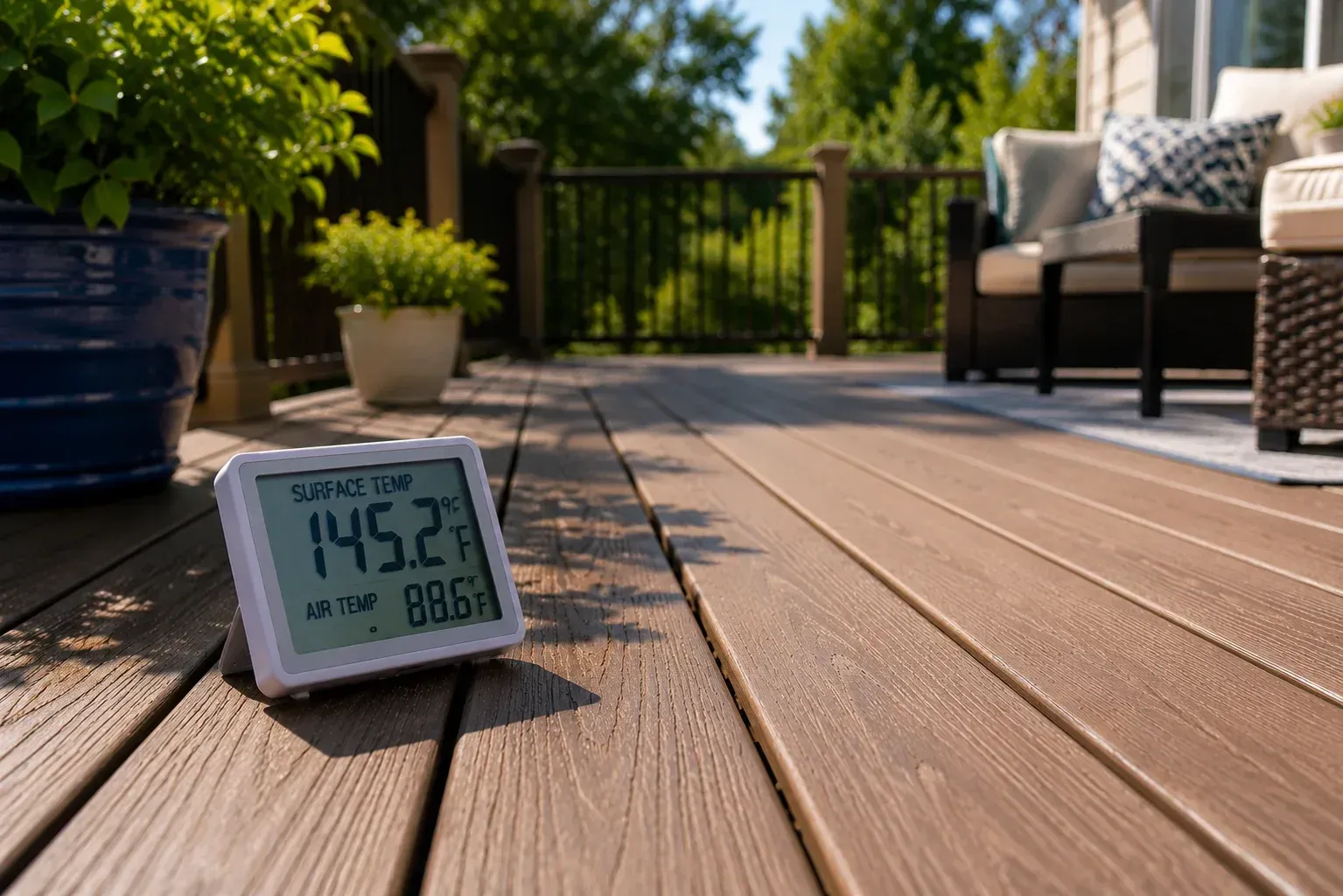
Table of Contents
- Introduction
- Why Composite Decking Gets Hot in the Sun
- How Hot Can Composite Decking Actually Get
- Factors That Affect Heat Retention
- Color and Heat Absorption
- Material Composition and Density
- Location, Orientation, and Sun Exposure
- Practical Ways to Keep Composite Decking Cooler
- Adding Shade
- Improving Airflow Underneath the Deck
- Choosing Lighter Colors or Cooler-Rated Products
- Limitations to Keep in Mind
- Conclusion
- Summary
- Frequently Asked Questions
Key Takeaways
- Composite decking can reach surface temperatures well above the surrounding air temperature on sunny days, especially with darker colors.
- Heat retention depends on color, material composition, board orientation, and how much direct sun the deck receives.
- Lighter colored composite boards generally stay cooler to the touch than darker ones under the same conditions.
- Shade structures, airflow underneath the deck, and material selection can all help reduce surface heat.
- No decking material is fully immune to heat buildup, so planning for sun exposure matters as much as the material itself.
Introduction
Composite decking can get hot enough to be uncomfortable to walk on barefoot, with surface temperatures sometimes reaching 30 to 40 degrees Fahrenheit above the surrounding air temperature depending on color and sun exposure. For homeowners and business owners in Wisconsin planning outdoor living spaces, this is a practical concern that affects how a deck actually gets used during the warmer months. Understanding why this happens, and what can be done about it, helps people make informed decisions before and after installation.
This matters because a deck is meant to be used, not just looked at. If a surface is too hot to walk on during peak sun hours, it limits when and how the space works for a household or business. This guide walks through the reasons composite decking heats up, what affects the degree of heat retention, and some practical, non-promotional ways to manage it. For those comparing options before building, this best materials guide offers additional context on how different decking materials perform in Wisconsin's climate.
Why Composite Decking Gets Hot in the Sun
Composite decking is made from a mix of wood fibers and plastic, typically polyethylene or polypropylene. This combination gives it durability and low maintenance requirements, but it also means the material absorbs and holds heat differently than natural wood.
Plastic components in composite boards tend to absorb solar radiation and convert it into heat at the surface. Unlike wood, which has natural airflow through its grain, composite material is denser and less porous, so heat has fewer ways to escape once it builds up.
How Hot Can Composite Decking Actually Get
Surface temperature depends on several variables, but studies and manufacturer testing have shown composite decking can reach temperatures significantly higher than the ambient air temperature on a sunny day.
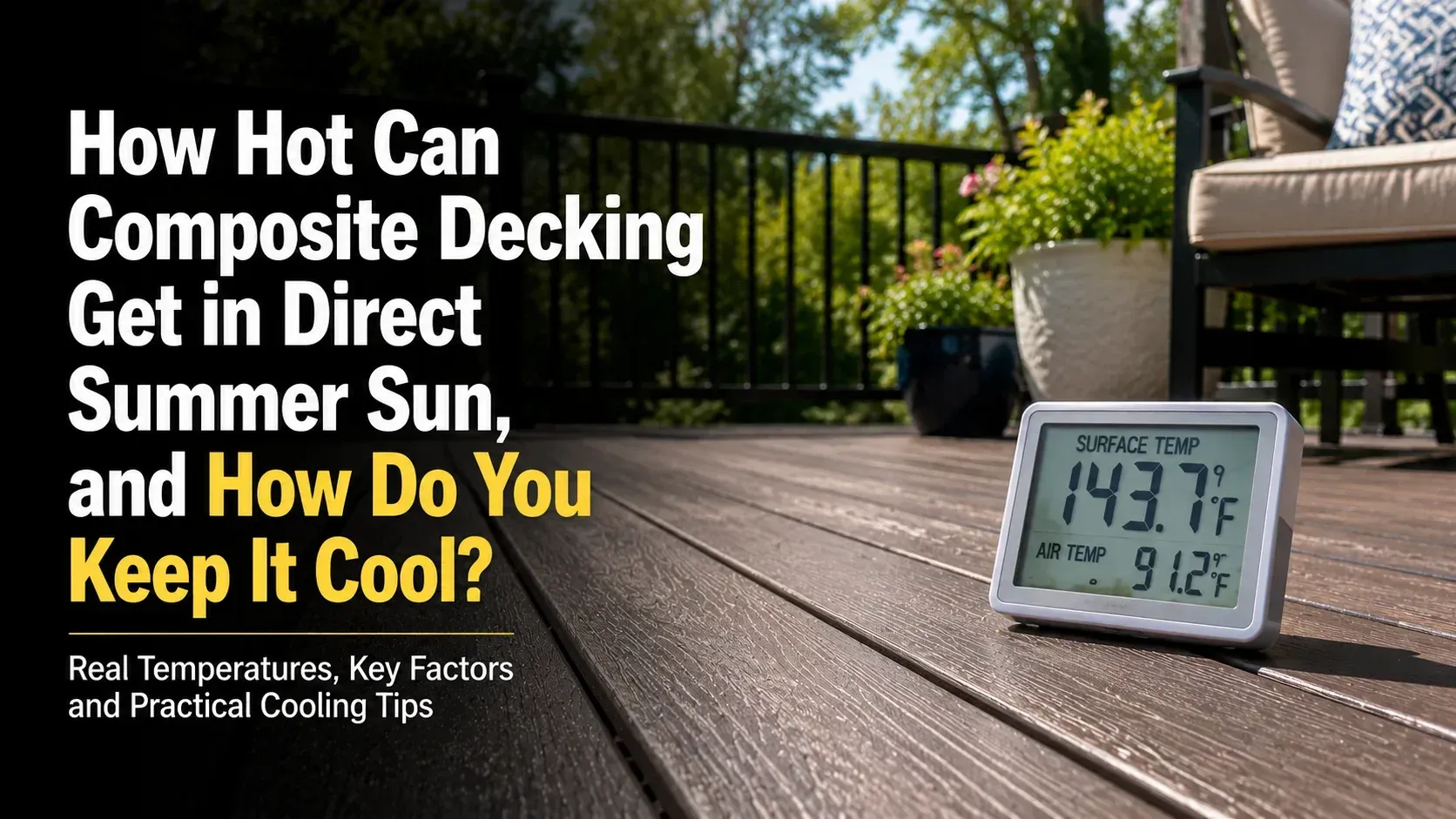
For example, on an 85 degree Fahrenheit day with direct sun exposure, some composite boards, particularly darker colored ones, have been measured at 120 to 160 degrees Fahrenheit at the surface. This range varies by brand, color, and how long the surface has been exposed to direct sunlight.
It is worth noting these numbers are general references from testing conditions, not guarantees of what any specific deck will experience. Local climate, time of day, and board angle all play a role.
Factors That Affect Heat Retention
Several variables influence how hot a composite deck surface gets and how long it stays hot. Understanding these factors helps with both material selection and deck placement decisions.
Color and Heat Absorption
Darker colors, such as deep browns, grays, and blacks, absorb more solar energy than lighter colors like tan, ivory, or light gray. This is a basic principle of how color interacts with light and heat, not something unique to composite decking.
Homeowners choosing decking primarily for aesthetic reasons should be aware that a darker board, while visually appealing, will likely run hotter under direct sun than a lighter one of the same material.
Material Composition and Density
Different composite decking brands use different ratios of wood fiber to plastic, along with different manufacturing processes. Denser boards or those with a higher plastic content sometimes retain heat longer than boards with more wood fiber content.
Capped composite boards, which have a protective outer layer, can behave differently than uncapped boards in terms of surface texture and heat distribution. Reviewing composite decking brands and their material specifications can help clarify these differences before making a purchasing decision.
Location, Orientation, and Sun Exposure
A deck facing south or west typically receives more direct sun during the hottest part of the day compared to one facing north or shaded by trees or structures. Orientation affects how many hours of direct sunlight the surface accumulates.
Decks near reflective surfaces, such as light colored siding or concrete, may also experience additional heat from reflected sunlight, which is a factor sometimes overlooked in initial planning.
Practical Ways to Keep Composite Decking Cooler
While no method eliminates heat buildup entirely, several approaches can help reduce surface temperature and make a deck more comfortable to use during summer months.
Adding Shade
Pergolas, umbrellas, retractable awnings, or strategically placed trees can reduce the amount of direct sunlight hitting the deck surface. Even partial shade during peak afternoon hours can lower surface temperature compared to full sun exposure.
Shade structures also provide comfort benefits beyond just reducing heat, such as protection from UV exposure for people using the space.
Improving Airflow Underneath the Deck
Proper ventilation beneath a deck can help dissipate some of the heat that builds up in the boards. This is particularly relevant for elevated decks where airflow underneath is more achievable than for ground level installations.
Builders sometimes account for this during construction by ensuring adequate spacing and avoiding fully enclosed skirting that traps heat.
Choosing Lighter Colors or Cooler-Rated Products
Some composite decking manufacturers now offer products marketed as having improved heat performance, often through reflective technology or lighter color formulations. These products are designed to run cooler than standard dark colored boards, though performance still varies by brand and testing conditions.
For homeowners planning a new installation, reviewing options in a low-maintenance deck design approach can help balance aesthetic preferences with practical heat considerations.
Limitations to Keep in Mind
It is important to understand that heat mitigation strategies reduce discomfort, they do not eliminate it. On extremely hot, sunny days, even light colored or heat-resistant composite decking will likely be warmer than ambient air temperature.
Additionally, individual comfort with surface heat varies. What one person finds tolerable to walk on barefoot, another may find uncomfortable. Personal footwear habits, time of day, and regional climate all affect the real-world experience of deck heat.
Homeowners and business owners should approach this as a planning consideration rather than a problem with a single fixed solution.
Conclusion
Composite decking can get considerably hotter than the surrounding air on sunny summer days, largely due to its material composition and color. Factors such as board color, density, orientation, and shade exposure all influence how hot a deck surface becomes and how long that heat lasts.
While shade structures, improved airflow, and lighter colored or heat-conscious products can help reduce surface temperature, no decking material is completely immune to heat buildup in direct sun. Understanding these variables ahead of time supports more realistic expectations and better planning for how an outdoor space will actually be used throughout the year.
Summary
This guide is intended to help homeowners and business owners understand the practical realities of composite decking heat performance, without overstating what any single material or method can guarantee. If you are weighing decking options for a project in the Shorewood, WI area and want to talk through material choices based on sun exposure and intended use, you can
contact us to discuss your specific space and goals. This is offered as general guidance to support an informed decision, not a sales pitch.
Frequently Asked Questions
Does all composite decking get equally hot in the sun?
No. Heat retention varies based on color, material composition, and manufacturer formulation. Darker boards generally absorb more heat than lighter colored ones.
Is composite decking hotter than wood decking?
In many cases, yes, particularly with darker colored composite boards, because the plastic content in composite material tends to retain heat differently than natural wood. However, this can vary by specific product and conditions.
Can shade fully prevent composite decking from getting hot?
No. Shade can reduce the amount of direct sun exposure and lower surface temperature, but it does not eliminate heat buildup entirely, especially during extended hot weather.
Are there composite decking products designed to stay cooler?
Some manufacturers offer products marketed with heat-reducing technology or lighter color options intended to run cooler than standard dark composite boards. Performance still depends on testing conditions and actual use.
Does the direction a deck faces affect how hot it gets?
Yes. Decks facing south or west typically receive more direct sunlight during peak afternoon hours, which can increase surface heat compared to decks with more shade or a different orientation.
Explore More Blogs