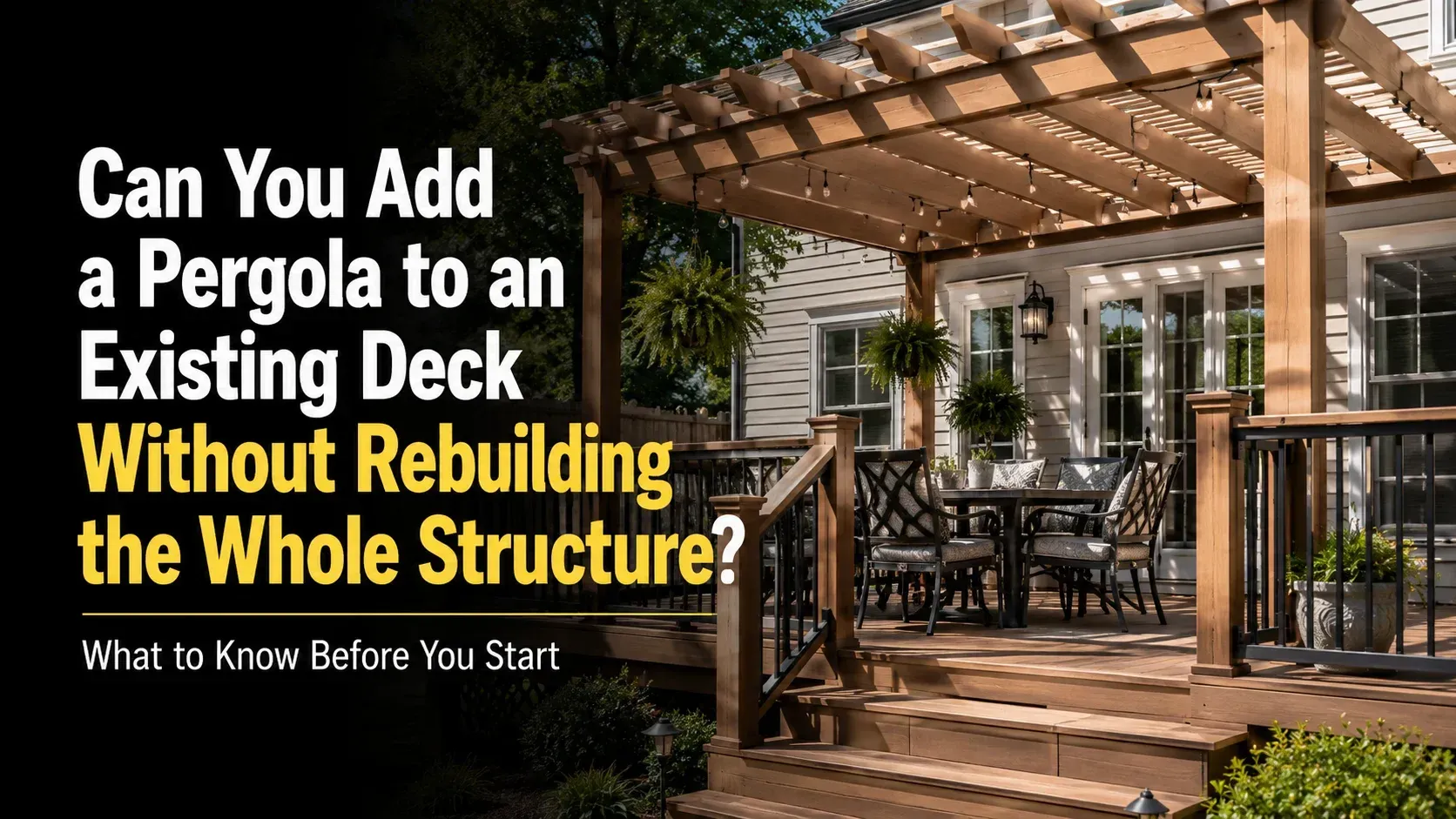
Can You Add a Pergola to an Existing Deck Without Rebuilding the Whole Structure?
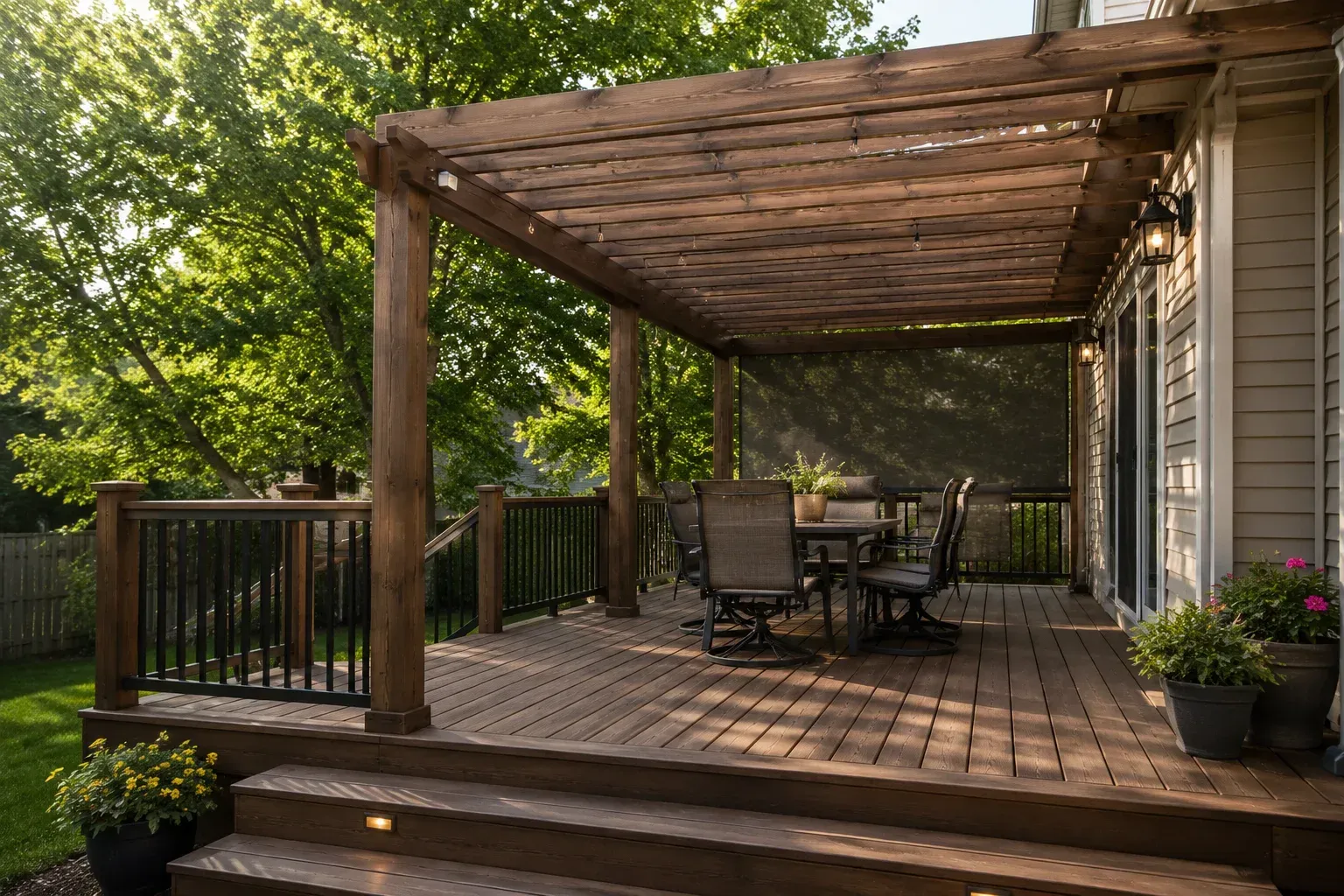
Table of Contents
- Introduction
- Understanding What a Pergola Adds to a Deck Structurally
- Can a Pergola Be Added Without a Full Rebuild
- Evaluating Your Deck's Structural Condition
- Load Capacity and Post Placement
- Footing Depth and Soil Conditions
- Age and Material Condition of the Deck
- When Reinforcement Is Likely Needed
- Anchoring Methods for Pergolas on Existing Decks
- Permits and Local Code Requirements
- Planning Considerations Before Installation
- Limitations and Realistic Expectations
- Conclusion
- Summary
- Frequently Asked Questions
Key Takeaways
- In many cases, a pergola can be added to an existing deck without a full rebuild, but this depends on the deck's current structural condition.
- Load-bearing capacity, post spacing, and footing depth all need to be evaluated before installation begins.
- Some decks require reinforcement, such as added beams or additional footings, before a pergola can be safely attached.
- Local permits are often required for pergolas, especially those attached to an existing structure, so checking local codes is an important early step.
- Skipping a structural assessment can lead to problems later, even if the pergola appears stable at first.
Introduction
Yes, in many cases a pergola can be added to an existing deck without rebuilding the whole structure, but it depends on whether the current deck can support the added weight and wind load. This is a common question for homeowners and business owners who already have a functional deck and want more shade or a defined outdoor living area without starting from scratch. Understanding what factors into that decision helps avoid costly surprises later.
A pergola adds both weight and wind resistance to a structure that was likely built with different load expectations in mind. Before deciding on
pergola construction services, it helps to understand what a deck actually needs to safely support one, and when reinforcement becomes necessary.
Understanding What a Pergola Adds to a Deck Structurally
A pergola is not just a decorative addition. It introduces new structural loads, including the weight of the pergola itself, potential snow load in colder climates, and wind pressure against its posts and beams.
Unlike a simple railing or built-in bench, a pergola typically requires posts that carry weight down through the deck to the footings below. This means the existing deck framing and footings need to be able to handle that additional load safely.
Can a Pergola Be Added Without a Full Rebuild
In many situations, yes. If the deck was built with adequate footings, proper post spacing, and is in good structural condition, a pergola can often be attached with some modifications rather than a complete rebuild.
However, this is not a universal answer. Decks vary widely in how they were originally built, what materials were used, and how they have held up over time. A deck built to support furniture and foot traffic was not necessarily designed with a pergola's additional loads in mind.
Evaluating Your Deck's Structural Condition
Before adding a pergola, it makes sense to evaluate a few specific aspects of the existing deck. This step is often overlooked, but it directly affects whether reinforcement will be needed.
Load Capacity and Post Placement
The spacing and size of the existing support posts matter. A pergola concentrates weight at specific points, usually at its corner posts, so those points need adequate support beneath them, whether that means an existing post, beam, or a newly added footing.
If the current post spacing does not align well with where the pergola posts need to go, additional framing or footings may be required even if the rest of the deck is structurally sound.
Footing Depth and Soil Conditions
Footings anchor the deck into the ground and are critical for stability, especially with added wind load from a pergola. In Wisconsin, footing depth is also tied to frost line requirements, which affects how deep footings need to be to avoid shifting during freeze and thaw cycles.
If the original deck footings were not installed to the appropriate depth for the local frost line, this can become a larger issue when additional structural weight is introduced. Reviewing
deck footings matter explains why this detail carries more weight than many people expect.
Age and Material Condition of the Deck
An older deck may show signs of wood rot, rusted fasteners, or general wear that were not obvious at first glance. These issues can significantly affect whether the deck can safely support a pergola.
A structural inspection, even a basic one, can reveal whether the deck's condition allows for a direct pergola installation or whether some repair work should happen first.
When Reinforcement Is Likely Needed
Reinforcement becomes more likely in a few common situations. If the deck was built without engineering plans, if post spacing does not match where the pergola will sit, or if the deck is more than 10 to 15 years old without recent inspection, added support is often recommended.
This can include adding new footings, doubling up existing beams, or installing additional posts specifically to support the pergola. None of this necessarily means starting over, but it does mean additional work beyond simply attaching the structure to what already exists.
Anchoring Methods for Pergolas on Existing Decks
There are a few common ways pergolas are anchored to existing decks, depending on the deck's design and condition.
Post bases can be bolted directly into existing framing if the framing is strong enough to handle the load. In other cases, posts are extended down through the deck surface to new or existing footings below, bypassing the deck framing altogether for better load distribution.
The right anchoring method depends on the specific deck, and this is typically determined after a structural review rather than decided in advance.
Permits and Local Code Requirements
Pergolas often require a permit, particularly when they are attached to an existing structure like a deck. Permit requirements vary by municipality, and Shorewood, WI and surrounding areas may have specific rules regarding setback distances, height limits, and structural requirements for attached structures.
Skipping the permit process can lead to complications later, including issues with home insurance or future property sales. Checking with local building authorities before starting construction is a practical step that helps avoid problems down the line.
Choosing Lighter Colors or Cooler-Rated Products
Beyond structural questions, a few other factors are worth thinking through. Pergola size and placement affect how much shade or sun exposure the space will get throughout the day, which ties into how the outdoor space will actually be used.
Material choice, whether wood, vinyl, or metal, also affects the total weight being added to the deck, which circles back to the structural evaluation. These decisions work best when made together rather than separately.
Limitations and Realistic Expectations
It is worth being clear that not every deck is a good candidate for a direct pergola installation without modification. Some decks may need enough reinforcement that the process starts to resemble a partial rebuild, even if the original deck surface stays intact.
There is no way to know for certain whether a specific deck can support a pergola without a hands-on structural assessment. General guidelines can point toward likely outcomes, but they are not a substitute for evaluating the actual deck in question.
Conclusion
Adding a pergola to an existing deck is often possible without a full rebuild, but it depends heavily on the deck's current structural condition, including post placement, footing depth, and overall material condition. Reinforcement is sometimes necessary, and this varies from one deck to another rather than following a single rule.
Permits and local code requirements also play a role in the process, particularly for structures attached to an existing deck. Taking time to evaluate these factors before installation supports a more informed and realistic plan for the project.
Still Dealing With a Hot Deck Every Summer?
This guide is intended to help homeowners and business owners understand the practical realities of composite decking heat performance, without overstating what any single material or method can guarantee. If you are weighing decking options for a project in the Shorewood, WI area and want to talk through material choices based on sun exposure and intended use, you can
contact us to discuss your specific space and goals. This is offered as general guidance to support an informed decision, not a sales pitch.
Frequently Asked Questions
Can any deck support a pergola without modification?
Not necessarily. It depends on the deck's structural condition, including post spacing, footing depth, and overall material condition. Some decks can support a pergola with minimal changes, while others need reinforcement first.
Do I need a permit for a pergola on my deck?
In most areas, yes, particularly for pergolas attached to an existing structure. Requirements vary by municipality, so checking with local building authorities before starting is recommended.
How do I know if my deck needs reinforcement before adding a pergola?
A structural evaluation is the most reliable way to determine this. Factors like deck age, post placement, and footing depth all play a role in whether reinforcement is needed.
Will adding a pergola affect my deck's footings?
It can. Pergolas add weight and wind load that the original footings may not have been designed to handle, especially if they were not installed to the appropriate depth for the local frost line.
Is it more affordable to add a pergola to an existing deck than to build a new one with a pergola included?
This depends on the condition of the existing deck. If significant reinforcement is needed, the cost difference compared to a combined build may be smaller than expected.
Explore More Blogs