What Should a Deck Builder Warranty Cover for Homeowners?
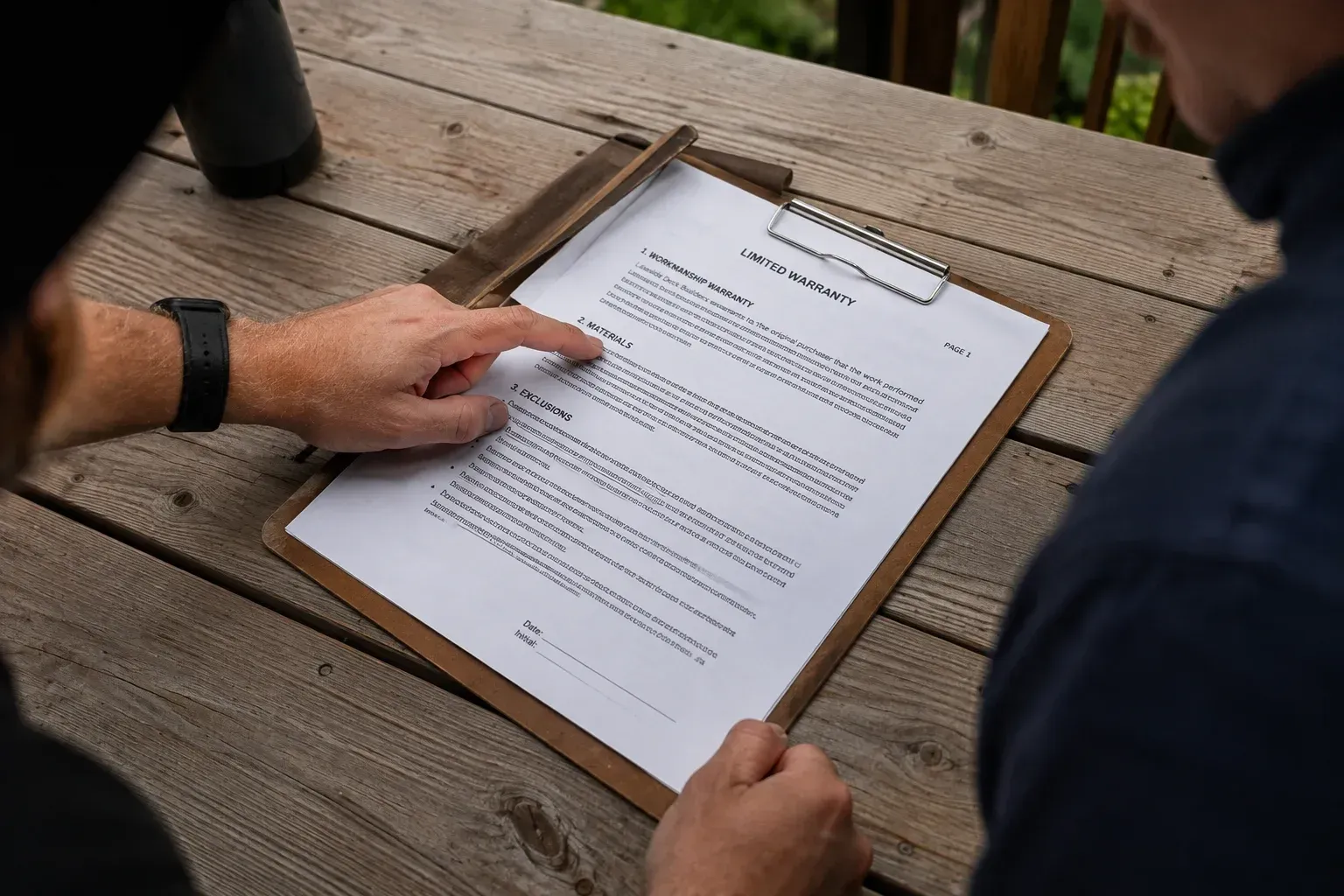
Table of Contents
- Introduction
- The Two Layers of Deck Warranty Coverage
- Workmanship Warranties Explained
- Material Warranties Explained
- What Does a Deck Warranty Typically Cover
- What Deck Warranties Commonly Exclude
- How Warranty Claims Actually Work in Practice
- Conclusion
- Have Questions About Deck Warranty Coverage in Shorewood, WI?
- Frequently Asked Questions
Key Takeaways
- A deck warranty typically involves two separate layers: a workmanship warranty from the builder and a material warranty from the product manufacturer.
- Deck warranty coverage almost never includes normal wood weathering, storm damage, or issues caused by improper maintenance.
- Workmanship warranty lengths vary widely between builders, and a longer stated term is not automatically a sign of better coverage.
- Reading the specific exclusions in a deck builder warranty matters more than the length of time it is advertised for.
- Asking a builder direct questions about what voids the warranty is one of the most useful steps a homeowner can take before signing a contract.
Introduction
A deck warranty typically covers two separate things: the builder's workmanship, meaning how the deck was constructed, and the materials themselves, which are usually covered under a separate warranty from the manufacturer. Homeowners and business owners evaluating deck building services in Shorewood, WI often assume a warranty is a single blanket guarantee, but understanding this two-part structure is the first step to knowing what is actually protected and what is not.
This distinction matters because a deck represents a significant investment, and warranty terms directly affect what happens if something goes wrong after installation. This article explains how deck builder warranty coverage is generally structured, what it commonly excludes, and what questions are worth asking before signing a contract.
The Two Layers of Deck Warranty Coverage
Most deck projects involve two distinct warranties that cover different aspects of the build. Confusing the two is one of the most common sources of misunderstanding when a warranty claim comes up later.
Workmanship Warranties Explained
A workmanship warranty, sometimes called a labor warranty, covers the quality of the construction itself. This includes issues like improperly installed framing, incorrect fastener placement, or structural problems that stem from how the deck was built rather than the materials used.
Workmanship warranty lengths vary significantly between builders, ranging anywhere from one year to a lifetime warranty on labor, depending on the company and the scope of work performed. A longer term is not automatically better if the underlying exclusions are broad, which is a point covered in more detail later in this article.
Material Warranties Explained
A material warranty is provided by the manufacturer of the decking product itself, such as composite decking brands, pressure-treated lumber suppliers, or railing system manufacturers. These warranties typically cover manufacturing defects in the product, such as premature fading, splitting, or structural failure of the material under normal use.
Manufacturer warranties are usually separate from the contractor's workmanship warranty and often require the homeowner to file a claim directly with the manufacturer rather than through the builder. Reviewing composite decking brands and their specific warranty terms is a useful step before finalizing a material choice, since coverage details differ by manufacturer.
What Does a Deck Warranty Typically Cover
Question: What does a deck warranty typically cover?
Direct Answer: A deck warranty typically covers structural workmanship issues under the builder's warranty and material defects under the manufacturer's warranty, but it does not usually cover normal weathering, storm damage, or problems caused by inadequate maintenance.
This means a deck warranty is not a general guarantee against all future problems. It is a specific commitment tied to defined categories of failure, and the exact scope depends entirely on the language in the individual warranty documents provided by the builder and the manufacturer.
What Deck Warranties Commonly Exclude
Understanding exclusions is often more useful than focusing on what is included, since exclusions define the real boundaries of protection.
Common exclusions across the industry include natural wood weathering such as graying or minor cracking, damage from severe weather events like hail or falling branches, damage caused by improper cleaning products, and issues that result from a homeowner skipping recommended maintenance. A consistent deck maintenance routine is often a condition of keeping a warranty valid, not just a suggestion for appearance.
Modifications made after installation, such as adding structures or altering the original design without the builder's involvement, can also void portions of a workmanship warranty. This is a detail that is easy to overlook when a homeowner later decides to add a pergola or built-in seating to an existing deck.
How Warranty Claims Actually Work in Practice
In practice, a warranty claim usually starts with documenting the issue, often through photos and a written description of when the problem was first noticed. Builders typically want to distinguish between a workmanship issue, which falls under their warranty, and a material issue, which needs to be routed to the manufacturer.
This distinction is not always obvious to a homeowner. A deck board that has cupped or warped, for example, could result from a manufacturing defect, improper spacing during installation, or inadequate ventilation underneath the deck, and each of those causes points to a different party being responsible for the fix.
Because of this, a builder who documents the original installation, including fastener spacing and ventilation details, is generally in a better position to help a homeowner resolve a claim efficiently, regardless of which warranty ultimately applies.
Conclusion
Deck warranty coverage generally involves two separate protections: a workmanship warranty from the builder and a material warranty from the manufacturer, each with its own terms, exclusions, and claims process. Understanding this structure, along with common exclusions like normal weathering and maintenance requirements, helps homeowners evaluate a warranty offer based on its actual protection rather than its advertised length alone.
Reading the specific terms and asking direct questions before signing a contract remains the most reliable way to understand what a deck warranty will and will not cover for a specific project.
Have Questions About Deck Warranty Coverage in Shorewood, WI?
If you would like to ask specific questions about workmanship and material warranty terms for your own deck project, you can
contact us to get clear answers based on your specific plans. This is offered as general guidance to support an informed decision, not a sales pitch.
Frequently Asked Questions
Does a deck warranty cover storm or weather damage?
Generally, no. Most deck warranties exclude damage from severe weather events like hail, high winds, or falling debris, since this falls outside normal wear covered by workmanship or material warranties.
Is a longer warranty always a better deal?
Not necessarily. A longer term with broad exclusions can offer less practical protection than a shorter warranty with narrower, clearly defined exclusions.
Who handles a warranty claim for defective decking material?
This typically depends on the manufacturer's process, since material defects are usually covered separately from the builder's workmanship warranty and may require a direct claim to the manufacturer.
Can skipping deck maintenance void a warranty?
Yes, in many cases. Workmanship and material warranties often require reasonable maintenance, such as periodic cleaning, and neglecting this can affect coverage eligibility.
Do deck warranties transfer to a new homeowner if the property is sold?
This varies by builder and manufacturer. Confirming transferability in writing before signing a contract is the most reliable way to know how a specific warranty applies after a sale.
Explore More Blogs