Top Composite Decking Brands and What Makes Them Different?
Table of Contents
- Introduction
- What Are Composite Decking Brands?
- Types of Deck Composite Material Used by Brands
- Performance Differences Between Composite Wood Decking Material
- Moisture Resistance and Climate Performance
- Fade and Color Stability Technologies
- Maintenance Requirements Across Brands
- Pricing Factors in Composite Decking Brands
- How to Choose Between Composite Decking Brands
- Local Considerations for Milwaukee, WI Homeowners
- Conclusion
- Frequently Asked Questions
Key Takeaways
- Composite decking brands differ mainly in material composition, protective coatings, and manufacturing technology.
- Deck composite material is designed to balance durability, appearance, and maintenance convenience.
- Climate factors in Milwaukee, WI can influence long-term performance expectations.
- Price is often tied to durability features rather than appearance alone.
- Informed comparisons help homeowners align materials with long-term property goals.
Introduction
Top composite decking brands differ mainly in their material composition, protective technology, and long-term performance characteristics. Understanding these differences matters because composite wood decking material is commonly used for outdoor living spaces where durability and maintenance efficiency are priorities.
For homeowners and property decision-makers in Milwaukee, WI, selecting decking materials requires evaluating moisture exposure, seasonal temperature shifts, and long-term maintenance effort. Composite decking brands generally aim to address these concerns using engineered wood fibers, plastic polymers, and protective surface treatments.
This guide provides an educational overview of how composite decking brands vary without promoting any specific product. Our goal is to help readers make informed, practical decisions when planning deck building projects through services like Lakeside Deck Builders.
What Are Composite Decking Brands?
Composite decking brands manufacture outdoor decking boards using engineered materials rather than solid natural wood. These brands typically combine wood fibers with synthetic polymers to improve durability and weather resistance.
Most composite decking brands focus on reducing common outdoor maintenance concerns such as:
- Splintering
- Rot from moisture exposure
- Insect damage
- Surface cracking over time
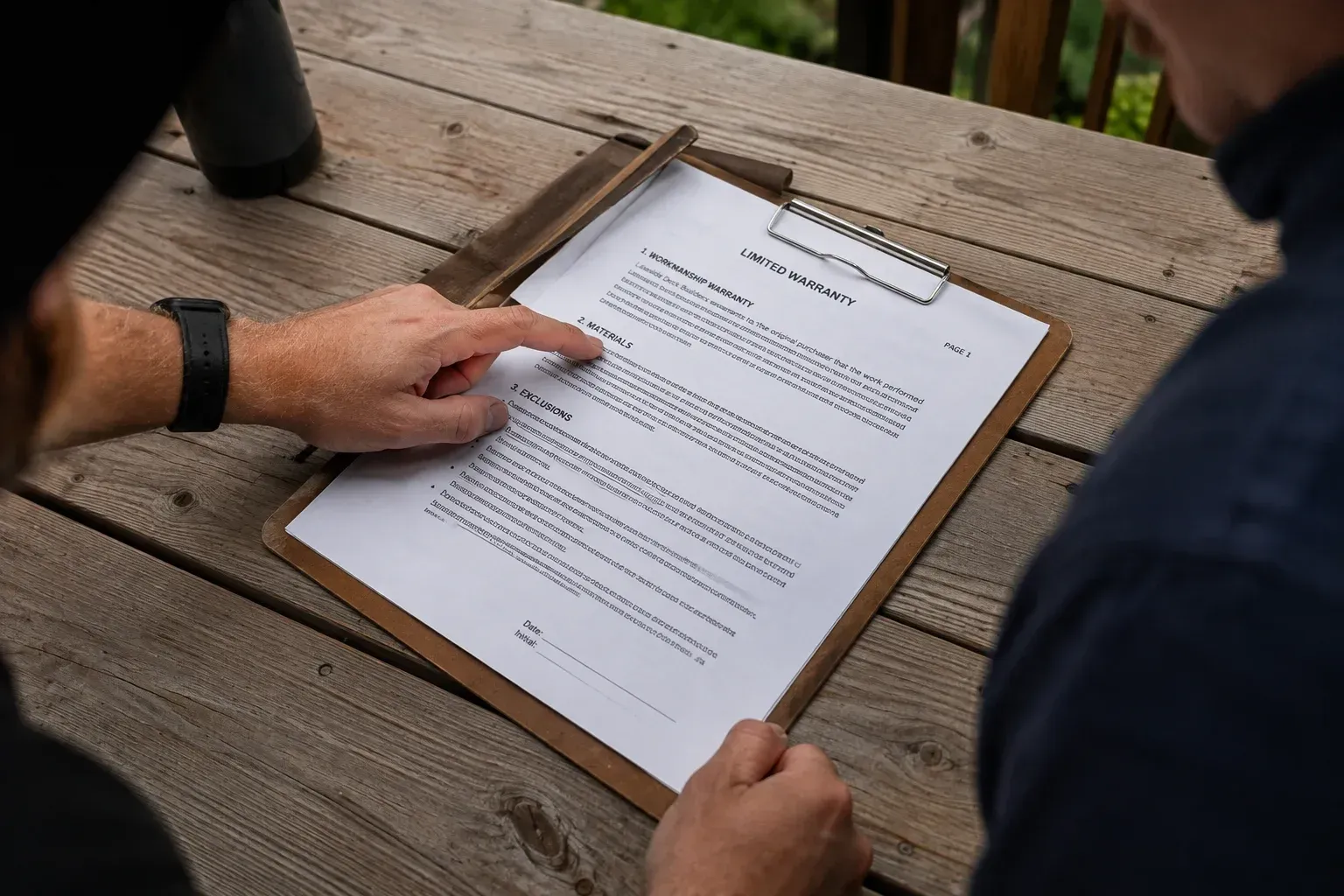
Homeowners often compare brands based on warranty coverage, material density, and surface finish technology. However, warranties usually outline conditions rather than guarantee performance outcomes.
Types of Deck Composite Material Used by Brands
Wood Fiber and Polymer Blends
Many composite decking brands use a blend of wood fiber and recycled plastic polymers.
This blend helps create boards that:
- Resist warping
- Maintain structural stability
- Offer consistent surface texture
The ratio between wood fiber and polymer often affects weight, cost, and durability characteristics.
Capped Composite Technology
Some brands use capped composite systems where a protective polymer shell covers the core material.
This design aims to improve:
- Stain resistance
- Surface moisture protection
- Color retention
Capped materials are generally marketed as easier to maintain, though performance may vary based on installation and environment.
Cellular Composite Structures
Certain manufacturers use cellular composite structures that reduce board weight while maintaining strength.
These materials may provide easier installation handling, especially for larger deck projects. However, long-term performance still depends on environmental exposure and installation quality.
Performance Differences Between Composite Wood Decking Material
Composite wood decking material performance varies across brands due to engineering differences.
Key performance categories include:
- Structural strength
- Surface durability
- Thermal expansion behavior
Composite boards can expand or contract slightly with temperature changes. Proper spacing during installation helps reduce potential structural stress.
Professional deck builders typically follow manufacturer installation guidelines to help manage material movement across seasonal temperature shifts.
Moisture Resistance and Climate Performance
Importance for Midwest Climates
In regions like Milwaukee, WI, seasonal weather cycles can influence outdoor material performance.
Composite decking brands often test products for:
- Rain exposure
- Snow accumulation
- Freeze and thaw cycles
Moisture resistance is usually improved through protective polymer coatings rather than water absorption prevention alone.
Drainage and Installation Design
Proper deck design helps prevent water pooling on surfaces.
Professional installation may include:
- Proper board spacing
- Drainage airflow design
- Structural slope considerations
These design factors help support long-term structural integrity without guaranteeing moisture protection.
Design and Installation Considerations
Structural Planning
Before installing a stainless deck, we prioritize proper structural engineering planning. Load calculations help determine:
- Beam spacing
- Support column placement
- Fastener strength requirements
Working with qualified construction professionals helps reduce structural stress risks.
Surface Design Choices
Stainless steel surfaces can be smooth, brushed, or textured. Surface texture affects:
- Slip resistance
- Cleaning ease
- Visual appearance
In outdoor environments where rain and snow are common, we often recommend textured finishes to help improve traction.
Drainage Management
Water management is critical in outdoor construction. Standing water can affect structural longevity even with corrosion-resistant materials.
Proper deck slope design helps guide water away from structural joints and support frames.
Fade and Color Stability Technologies
UV Protection Systems
Most composite decking brands include UV stabilization additives.
These additives help reduce:
- Color fading from sunlight exposure
- Surface dulling over time
Color changes may still occur naturally due to environmental exposure. Some homeowners prefer natural weathering appearance changes.
Pigment Integration Methods
Manufacturers may integrate pigments during production rather than applying surface paint coatings.
Integrated color technology generally helps maintain more consistent surface appearance across boards. However, exact color matching between production batches can sometimes vary.
Maintenance Requirements Across Brands
Composite decking materials are generally marketed as lower maintenance compared to natural wood, but maintenance is still recommended.
Typical maintenance tasks may include:
- Removing debris from surface grooves
- Cleaning stains using manufacturer-approved cleaning solutions
- Inspecting fasteners and structural supports
Harsh chemical cleaners or pressure washing at high pressure levels may damage surface textures on some brands.
Pricing Factors in Composite Decking Brands
Material Quality and Engineering
Higher-priced composite decking brands often invest more in:
- Protective coatings
- Advanced polymer technology
- Warranty support programs
However, pricing differences do not always directly correlate with performance outcomes.
Installation Complexity
Installation labor costs may influence total project expenses.
Factors that affect installation pricing include:
- Deck design complexity
- Board pattern layout
- Structural support preparation
Working with experienced deck builders can help manage installation consistency.
How to Choose Between Composite Decking Brands
Consider Property Usage
Homeowners should evaluate:
Foot traffic volume
Outdoor furniture weight
Weather exposure patterns
Families who frequently use outdoor spaces may prioritize durability characteristics.
Evaluate Long-Term Maintenance Preferences
Some homeowners prefer materials requiring minimal regular cleaning. Others may prioritize appearance flexibility.
Review Manufacturer Documentation
Technical specifications can help compare:
- Load capacity
- Surface slip resistance
- Thermal performance
Reading documentation carefully helps support informed purchasing decisions.
Local Considerations for Milwaukee, WI Homeowners
Milwaukee’s climate includes cold winters and humid summers, which can influence outdoor construction material selection.
Local homeowners often consider:
- Snow removal practices
- Salt exposure from winter maintenance
- Freeze-thaw cycles affecting structural components
- Professional deck construction services in the region may recommend material selections based on seasonal climate patterns rather than appearance alone.
Lakeside Deck Builders supports local property improvement projects with consultation and deck construction planning.
Conclusion
Top composite decking brands differ primarily in material engineering, protective technology, and price positioning. Composite wood decking material continues to evolve through improved polymer blending, UV protection systems, and moisture resistance technologies.
Understanding these differences helps homeowners evaluate long-term outdoor living investments more carefully. Rather than focusing on brand popularity, reviewing technical specifications and climate suitability provides a more practical decision-making framework.
Working with professional builders can help translate material knowledge into practical installation outcomes. However, material selection should always align with property needs, environmental conditions, and maintenance preferences.
Book a Deck Building Service
Book a deck building consultation with Lakeside Deck Builders today to discuss material options, design considerations, and project planning guidance.
Send us an email at
lakesidecontractingmke@gmail.com
or call us at
262-221-4321 to learn more about our services.
Frequently Asked Questions
Are composite decking brands completely maintenance-free?
No. Composite decking generally requires less maintenance than natural wood but still needs periodic cleaning and inspection to maintain surface quality.
How long does composite decking usually last?
Lifespan varies by brand quality, climate exposure, and installation quality. Manufacturers often provide warranty coverage details that outline material expectations.
Does composite decking fade over time?
Some color fading may occur due to sunlight exposure. UV protection technologies are designed to slow this process rather than completely stop it.
Is composite decking suitable for cold climates like Milwaukee?
Composite decking materials are often designed to handle seasonal temperature changes. Proper installation spacing helps manage material expansion and contraction.
Is composite decking more expensive than wood decking?
Initial material cost is often higher. However, total long-term cost comparisons should consider maintenance effort and replacement cycles rather than upfront pricing alone.
Explore More Blogs