What Does a 3-Season Room Cost in Milwaukee, WI?
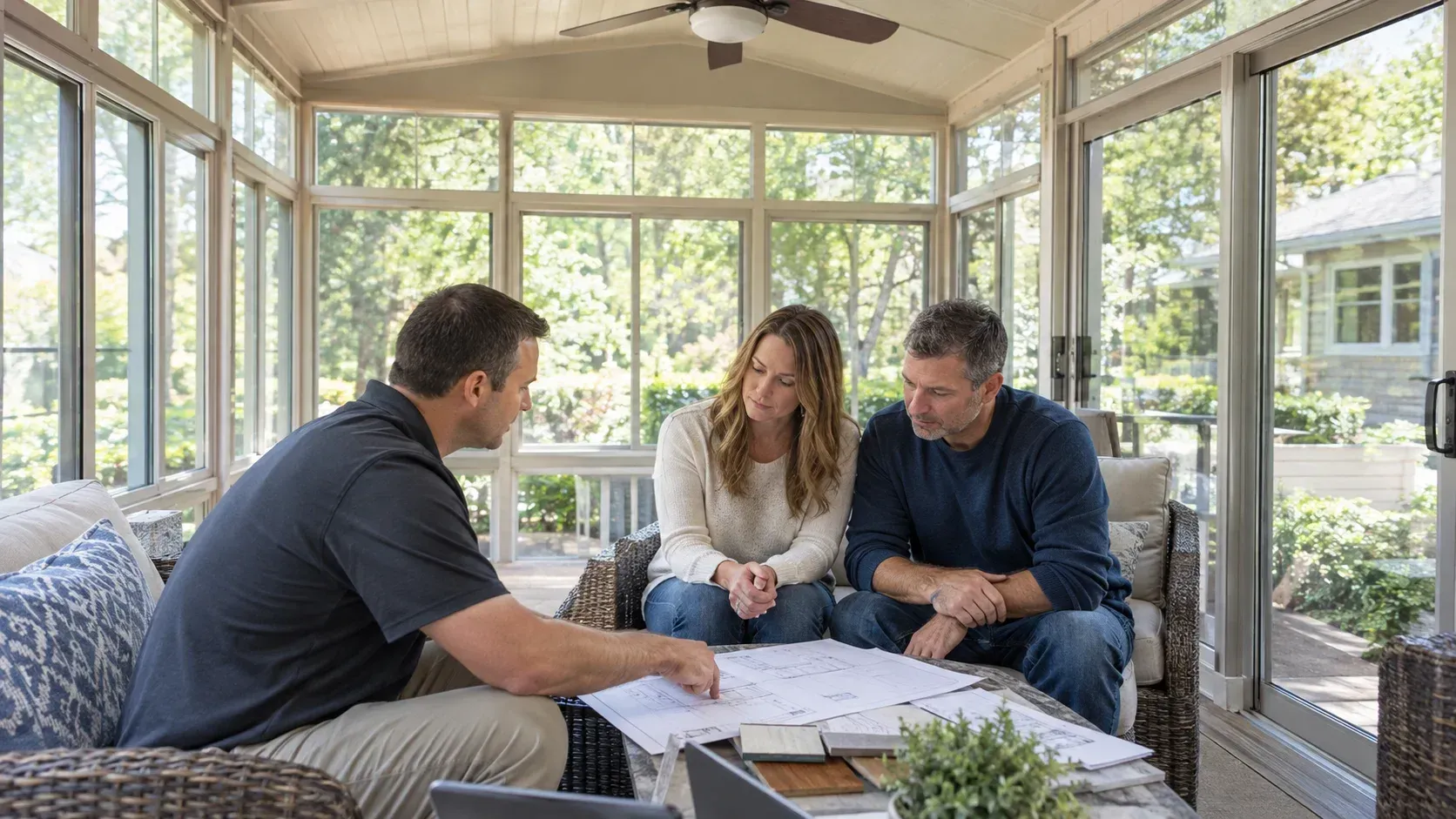
Table of Contents
- Introduction
- 3 Season Room Cost in Milwaukee: Why There Is No Single Number
- The Foundation Question Moves the Budget Most
- What Else Drives the Price
- 3 Season Room Price vs Four-Season: The Expensive Fork
- Sunroom Installation Cost Wisconsin: What Online Ranges Miss
- What a Real Quote Should Break Down
- How to Spend Less Without Regretting It
- Conclusion
- Request a Free 3-Season Room Estimate
- Frequently Asked Questions
Key Takeaways
- The biggest single factor is what you are building on. An existing deck or patio changes everything.
- Three-season and four-season rooms are different builds at different prices. Decide that first.
- Size matters less than you expect. Foundation, glass and roof matter more.
- Online price ranges are averages of other people's houses, not yours.
- A real quote breaks down every line. If it does not, ask why.
Introduction
There is no single price for a 3-season room, and anyone who gives you one over the phone is guessing. What there is, is a clear set of things that move the number, and one that moves it more than the rest: whether you are building on something that already exists.
A room added onto a sound existing deck or patio is a different project from one that starts with excavation and a new foundation. That difference usually outweighs everything else on the list.
Here is what actually drives the cost. What a 3-season room involves is here if you are still working out whether you want one.
3 Season Room Cost in Milwaukee: Why There Is No Single Number
Cost depends on size, design, materials, foundation, windows and the rest of the project requirements. Those vary enormously between two houses on the same street.
Two examples that would price very differently:
- A modest room built on an existing, structurally sound deck, with standard windows and a simple shed roof.
- A larger room on new footings, with a gable roof matched to the house, skylights, French doors and upgraded glass.
Same category of project. Completely different builds.
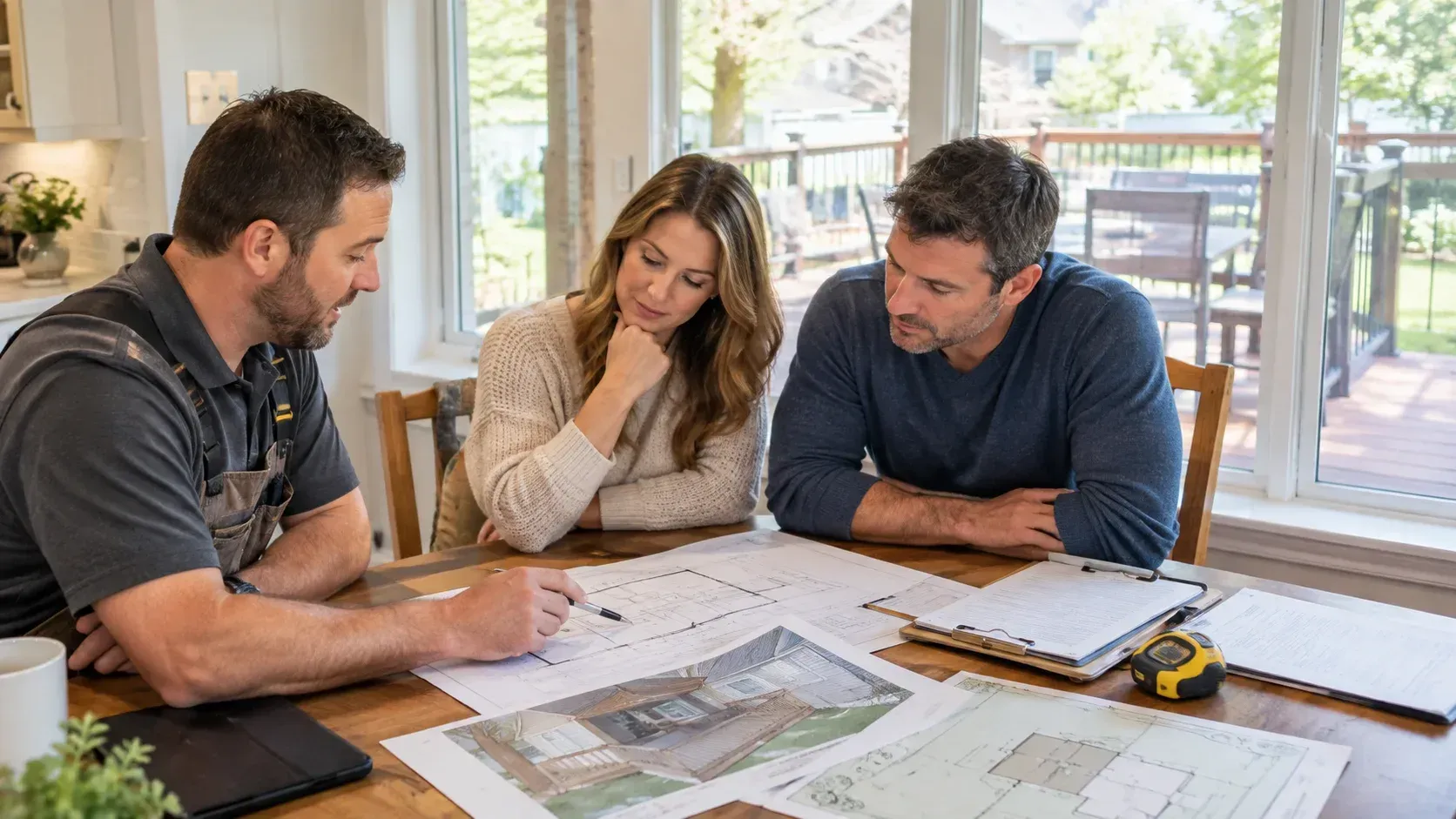
This is why a visit matters more than a calculator. Somebody has to look at what is already there.
The Foundation Question Moves the Budget Most
This is the first thing worth finding out about your own house.
If you have an existing deck or patio, the question is whether it can carry an enclosed structure. Some can. Many cannot without reinforcement, because a deck designed for furniture and people is not necessarily designed for walls, glass and a roof.
If you are starting from nothing, you are adding excavation, footings and a foundation to the project before any of the visible work begins. In Wisconsin that means footings below frost depth, which is not optional and not cheap.
If your existing structure needs reinforcement, you are somewhere in between, and that is a common outcome.
None of this is visible from the street, which is exactly why remote estimates miss it. If you are considering building or rebuilding the deck underneath at the same time, it is worth pricing the two together rather than in sequence.
What Else Drives the Price
After the foundation question, in rough order of impact:
- Glass. Window area, glass quality and energy efficiency. This is usually the largest material cost.
- Roof. A simple shed roof costs less than a gable roof matched to your home's architecture. Skylights add more.
- Size. It matters, but less per square foot than people assume, because the fixed costs land either way.
- Doors. French doors and upgraded entries cost more than a standard slider.
- How it meets the house. Tying into an existing roofline and siding is more work than a clean wall.
- Interior finishes. Built-in shelves, flooring, trim, lighting and electrical.
- Site access. Tight yards and difficult access add labour.
- Permits and inspections. Real costs that vary by municipality.
Notice that two of the top three are not about how big the room is.
3 Season Room Price vs Four-Season: The Expensive Fork
Decide this before anything else, because it changes the build rather than just the budget.
A three-season room is an enclosed addition with plenty of windows, built for spring, summer and fall. It usually is not insulated and is not connected to your home's heating and cooling. It is a warm-weather space.
A four-season room is fully insulated with heating and air conditioning for year-round use. More insulation, better glass, more structure, HVAC work, and generally more involvement from the building department.
Four-season costs meaningfully more. Whether that is worth it depends on honestly how often you would use the room in January. Plenty of Wisconsin families use a three-season room happily from April to October and do not miss the rest.
The full comparison between four-season and three-season is worth reading before you commit, because changing your mind later is expensive.
Sunroom Installation Cost Wisconsin: What Online Ranges Miss
Online price ranges are useful for a rough sense of scale and useless for budgeting your project. Here is what they cannot know.
- What your existing structure can carry. The single biggest variable.
- Your frost depth and soil. Which set your footing requirements.
- How your house is built. Where the addition ties in, and what is in the way.
- Your municipality. Permit requirements and fees differ across the Milwaukee area.
- Current material pricing. Which moves.
- Your actual choices. Glass, roof and doors swing the number more than square footage.
Use a published range to decide whether to start the conversation. Do not use it to set your budget.
What a Real Quote Should Break Down
A good quote is itemised. You should be able to see every expense with no hidden costs, and you should be able to tell which lines you could change.
Look for:
- Foundation and footings as their own line
- Framing and structure
- Windows and glass, specified
- Roofing, and how it ties into the house
- Doors
- Electrical
- Interior finishes
- Permits and inspections
- Site preparation and cleanup
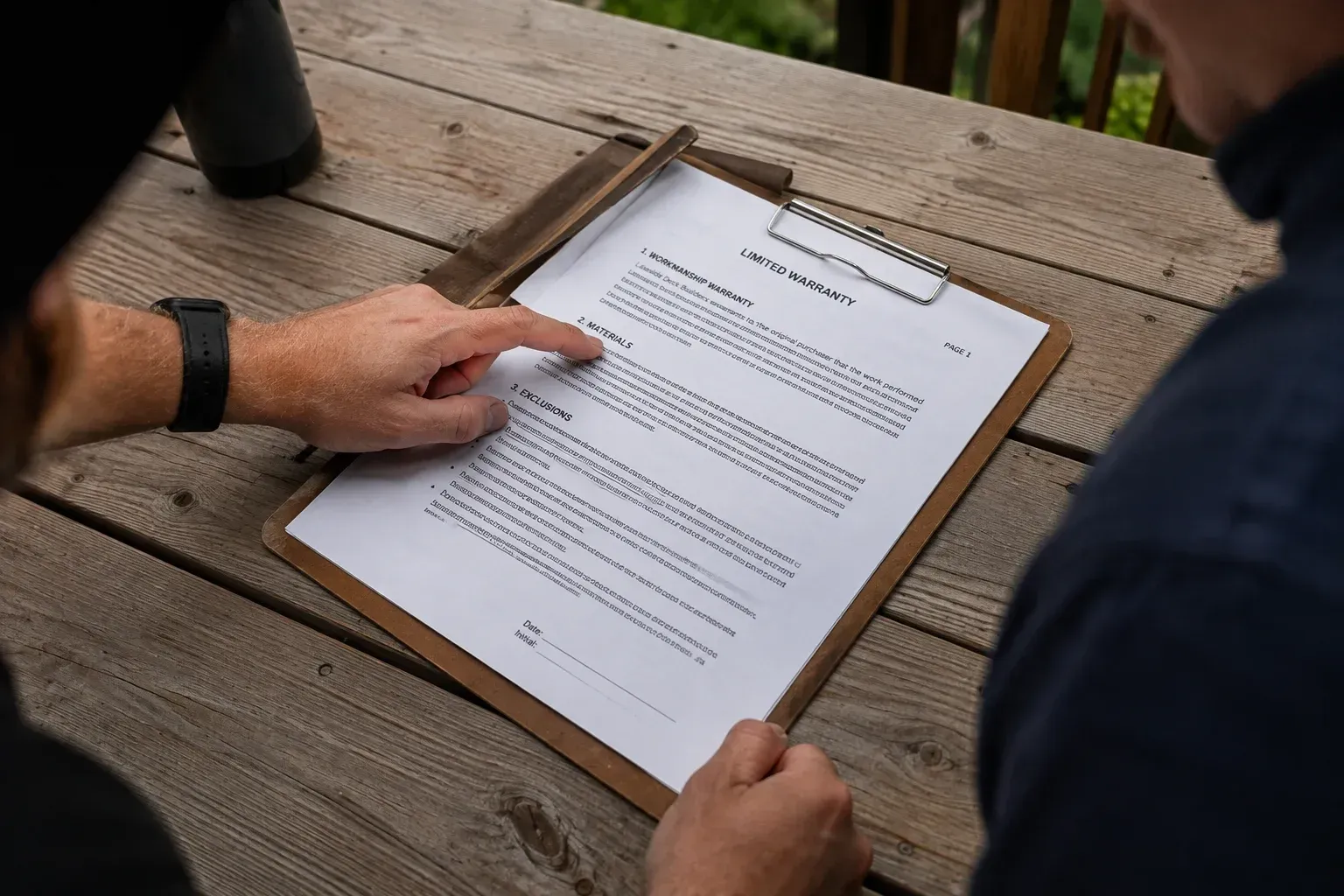
- Warranty terms
If a quote arrives as a single number, you cannot negotiate it intelligently and you cannot compare it with anyone else's. Ask for the breakdown.
How to Spend Less Without Regretting It
Sensible places to economise:
- Simpler roofline. A shed roof instead of a gable, where it suits the house.
- Fewer or smaller skylights.
- Standard door instead of French doors.
- Simpler interior finishes, which you can upgrade later.
- Build on sound existing structure, where it genuinely is sound.
- Plan in winter. Scheduling is easier off-season.
Places not to economise:
- Footings and foundation. Everything else sits on them.
- Glass quality. You will feel it every season.
- Roof and flashing where it meets the house. This is where water gets in.
- Permits. Skipping them creates problems at resale.
The pattern is simple. Save on things you can change later. Do not save on things buried in the structure.
A well-built addition also tends to help at resale, and how a sunroom affects home value covers that side.
Conclusion
The honest answer is that your 3-season room cost depends mostly on what you are building on, what the roof and glass look like, and whether you want three seasons or four.
Settle the three-versus-four question first. Then find out what your existing deck or patio can actually carry. Those two decisions will tell you more about your budget than any online range.
Then get an itemised quote and look at the lines.
Request a Free 3-Season Room Estimate
The useful starting point is somebody looking at what is already in your yard.
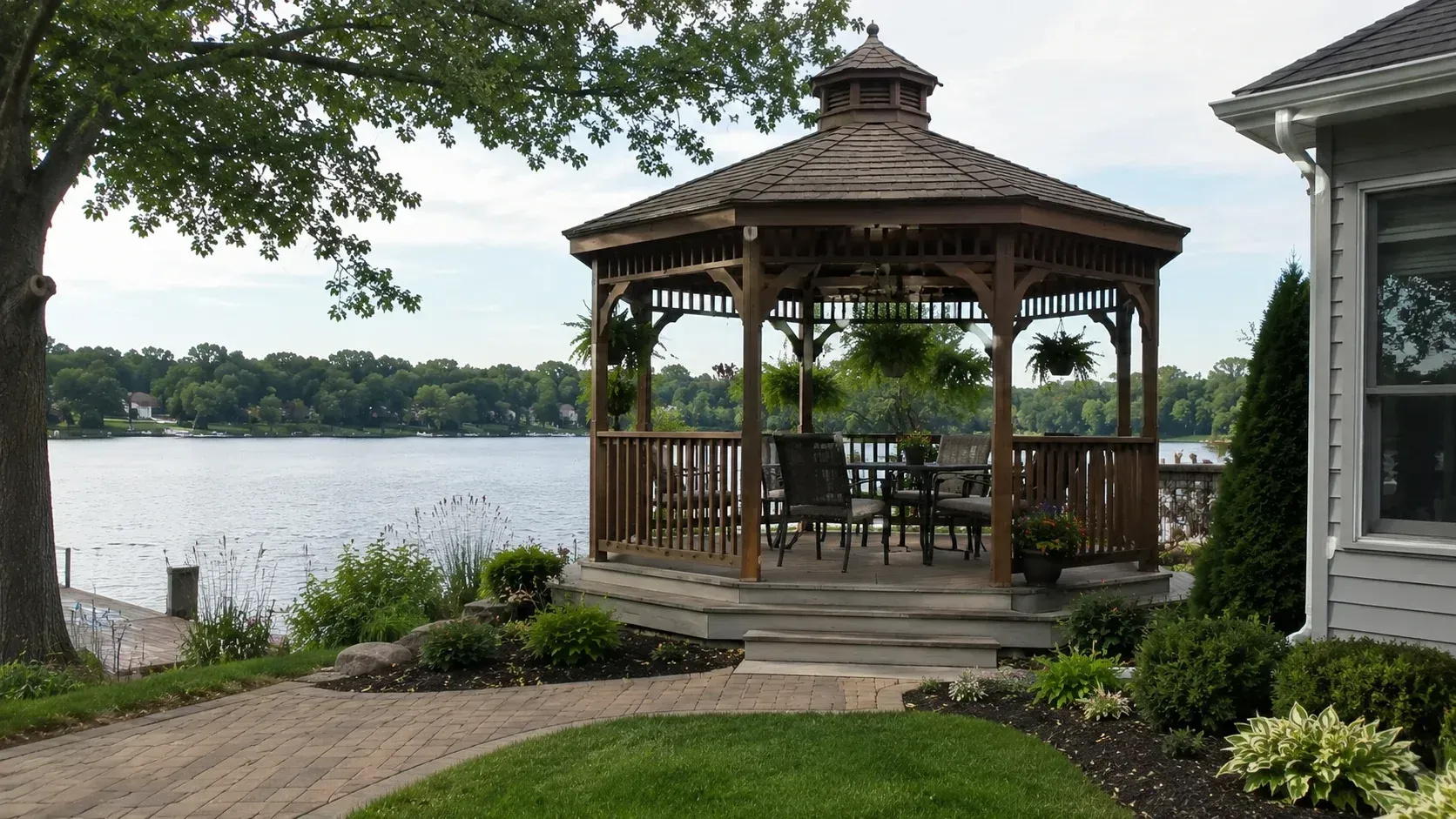
Our 3-season room construction starts with a design consultation. We build enclosed room additions with plenty of windows for spring, summer and fall, using energy-efficient windows and quality glass and framing, with window and roofing styles matched to your home's architecture, including skylights. French doors, built-in shelves and a connection to an existing patio, deck or pergola are all options.
Every project comes with a warranty and a free, detailed quote that breaks down every expense, with no hidden costs.If you are still deciding what a 3-season room is for, start there.
Lakeside Deck Builders, 4050 North Oakland Avenue, Shorewood, WI 53211.
Tell us what is in your yard now and roughly what size you have in mind, or call
(262) 221-4321.
Frequently Asked Questions
Can you give me a ballpark over the phone?
Only a very rough one, and it would not be much use. The foundation question alone can move a project substantially, and nobody can answer it without seeing what is already there.
Is it cheaper to build on my existing deck?
Often yes, if the deck can carry an enclosed structure. Many decks were built for furniture and people, not walls, glass and a roof, so it has to be assessed rather than assumed.
How much more does a four-season room cost?
Meaningfully more, because it is a different build. Insulation, better glass, more structure and HVAC all add up. Decide which you want before design starts, since switching later is expensive.
Does size drive the price most?
Less than people expect. Foundation, glass and roof design typically move the number more than square footage, because the fixed costs land whether the room is small or large.
Do I need a permit for a 3-season room?
Almost certainly, since it is a structural addition. Requirements and fees vary by municipality across the Milwaukee area, so confirm with your local building department early.
Explore More Blogs