How Does a 3 Seasons Room Perform in Milwaukee Weather?
Table of Contents
- Introduction
- What Is a 3 Seasons Room and How Is It Different From a Sunroom?
- How Does Milwaukee's Climate Affect 3 Season Room Performance?
- What Materials Hold Up Best in Midwest Weather?
- How to Keep a 3 Season Room Warm During Cooler Months
- What Design Considerations Matter for Milwaukee Homeowners?
- Conclusion
- Book a Consultation With Lakeside Deck Builders
- Frequently Asked Questions
Key Takeaways
- A 3 seasons room is designed for spring, summer, and fall use, and is generally not suited for year-round occupancy in Milwaukee's climate without added insulation or heating.
- Milwaukee experiences temperature extremes ranging from below 0°F in winter to above 90°F in summer, which directly affects how a 3 seasons room performs throughout the year.
- Material selection, including aluminum framing, tempered glass, and screened panels, plays a significant role in durability and weather resistance.
- Homeowners can extend usability by exploring supplemental heating options, though these do not convert the space into a fully insulated four-season room.
- Proper installation, drainage planning, and ventilation are key factors that determine long-term performance and structural integrity.
Understanding Pergola Construction Materials
A 3 seasons room performs well in Milwaukee's spring, summer, and early fall months, offering a weather-protected space that connects indoor comfort with outdoor views. It does not function like a fully insulated addition, but for homeowners who want to enjoy the outdoors without dealing with insects, rain, or wind, it provides a practical and cost-effective solution.
Milwaukee's climate is classified as humid continental, which means residents experience both sharp winters and warm, sometimes humid summers. Understanding how this range of conditions interacts with a 3 seasons room helps homeowners set realistic expectations before starting a project. This guide walks through performance factors, suitable materials, heating strategies, and design choices that apply specifically to the Milwaukee area.
What Is a 3 Seasons Room and How Is It Different From a Sunroom?
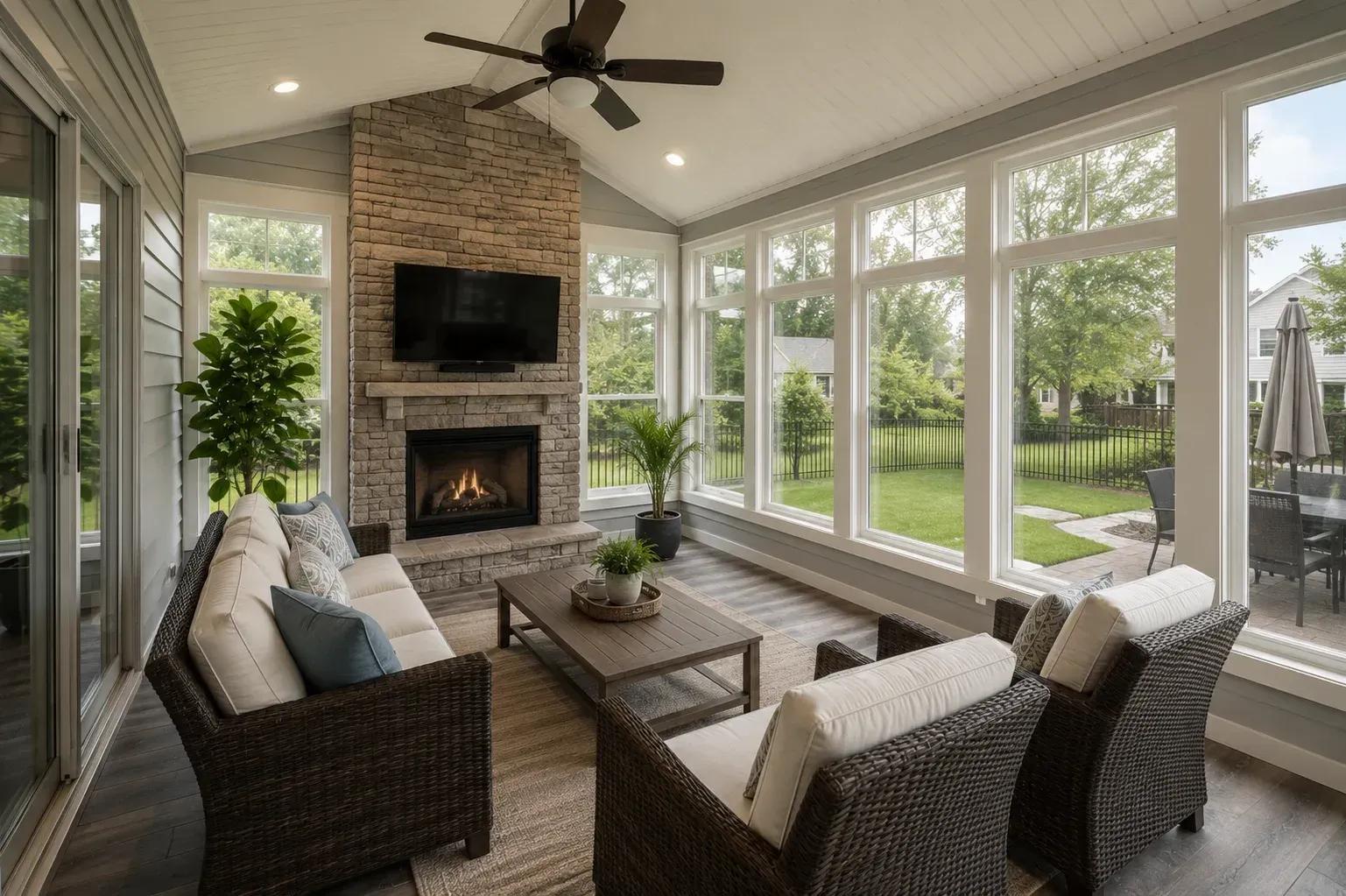
A 3 seasons room is an enclosed porch or addition designed for use during three of the four seasons, typically excluding winter. It uses screen panels, glass windows, or a combination of both to block wind, rain, and insects while still allowing airflow and natural light.
Unlike a four-season sunroom or insulated addition, a 3 seasons room is not designed with continuous insulation or a dedicated HVAC connection. It typically lacks insulated wall panels, vapor barriers, and heating systems built into the structure itself. This distinction matters when evaluating performance in a city like Milwaukee, where winter temperatures regularly fall below freezing.
The cost difference between the two options is also meaningful. A 3 seasons room generally represents a lower upfront investment while still delivering a noticeable improvement in livable outdoor space. Homeowners who primarily use their outdoor spaces from April through October often find a 3 seasons room is well-matched to their actual usage patterns.
How Does Milwaukee's Climate Affect 3 Season Room Performance?
Milwaukee sits along Lake Michigan and experiences lake-effect weather patterns that can produce rapid temperature shifts, heavy snow, and elevated humidity levels. The average January low is around 15°F, while July averages high near 82°F. These extremes shape how any outdoor structure performs over time.
Spring and Fall
During transitional seasons, a 3 seasons room provides genuine protection from light rain and cool breezes. Temperatures in April and October often hover between 40°F and 65°F, which is within a comfortable range for screened or glass-enclosed spaces, especially when supplemental heat is added.
Summer
Summer is where a 3 seasons room performs most reliably. Screen systems allow cross-ventilation, which helps manage humidity and heat buildup. Proper roof overhangs and eastern or northern orientation can reduce direct solar gain, keeping the interior cooler on hot days.
Winter
Winter is the primary limitation of a 3 seasons room in Milwaukee. Without insulation and a dedicated heat source, interior temperatures will closely track outdoor conditions once they drop below freezing. Using the space during Wisconsin winters is generally not advisable unless the homeowner has incorporated supplemental heating and taken steps to protect plumbing or electrical components from freeze damage.
What Materials Hold Up Best in Midwest Weather?
Material selection has a direct impact on how well a 3 seasons room withstands Milwaukee's weather over time. The right choices reduce maintenance demands and improve structural longevity.
Framing Options
Aluminum framing is a common choice for Midwest climates because it resists rust, does not warp with moisture changes, and holds up under snow load when properly engineered. Wood framing can be used but requires consistent maintenance to prevent moisture damage and warping across seasonal temperature swings.
Glazing and Screening
Tempered glass provides impact resistance and performs better under thermal stress than standard glass. Low-E glass coatings can reduce solar heat gain in summer while retaining some warmth in cooler months. Insulated glass units (IGUs) add a further layer of performance but are more commonly associated with four-season rooms.
Fiberglass screening is more durable than aluminum screening in cold-weather climates because it resists corrosion and maintains flexibility at lower temperatures. Pet-resistant screen options are available for households where durability is a priority.
Roofing
Solid roof systems, whether integrated with the home's existing roofline or installed as a separate structure, provide better protection from Milwaukee's variable precipitation, including heavy spring rains and early or late-season snowfall. Polycarbonate roofing panels are sometimes used for natural light but can increase interior heat in summer and may accumulate algae over time if not maintained.
How to Keep a 3 Season Room Warm During Cooler Months?
One of the most common questions Milwaukee homeowners ask is how to keep a 3 season room warm during the shoulder seasons. While structural insulation is not part of a standard 3 seasons room build, there are practical approaches that can extend usability into cooler months.
Portable and Plug-In Heaters
Electric space heaters and infrared heaters can raise the interior temperature of a 3 seasons room noticeably during mild fall evenings. They are not designed for sustained use in temperatures below freezing, and they should always be used according to manufacturer safety guidelines.
Propane or Natural Gas Units
Vent-free or direct-vent propane heaters can deliver more consistent warmth than electric options. Homeowners should verify that the chosen heater is rated for enclosed spaces and that ventilation is adequate to prevent carbon monoxide buildup.
Ceiling Fans
Installing a ceiling fan rated for damp or wet environments helps with air circulation in both warm and cool months. In warmer seasons, it reduces the perception of heat. In cooler seasons, reversing the fan direction pushes warm air downward, which can make the space more comfortable.
Thermal Curtains and Interior Shades
Adding interior drapes or insulated curtains to glass panels can slow heat loss on cool nights. While this does not replace structural insulation, it creates an added layer of resistance against drafts.
Important Note: None of these methods convert a 3 seasons room into a four-season space. Homeowners who require year-round use should discuss a fully insulated sunroom addition with their contractor.
What Design Considerations Matter for Milwaukee Homeowners?
Beyond materials and heating, several design decisions influence how well a 3 seasons room integrates with a Milwaukee home and holds up under local conditions.
Orientation
South-facing rooms collect the most solar heat, which is useful in fall but can create uncomfortable conditions in summer without adequate ventilation or shading. East or north-facing orientations tend to stay cooler, while west-facing rooms may experience intense afternoon sun.
Drainage and Snow Load
Milwaukee receives an average of roughly 47 inches of snow per year according to historical climate data. The roof structure of any addition needs to be engineered to handle local snow load requirements. Flat or low-slope roofs are more susceptible to ice dam formation and may require additional drainage planning.
Foundation and Frost Line
Wisconsin's frost line is typically around 48 inches below grade. Footings or piers for any addition must reach below this depth to prevent heaving and structural shifting through freeze-thaw cycles. This is a non-negotiable aspect of construction in the Milwaukee area and should be confirmed with the contractor prior to any build.
Transition From Interior to Exterior
Thoughtful thresholds, weatherstripping, and door seals reduce air infiltration from the main home into the 3 seasons room and vice versa. This protects the interior of the home from temperature and humidity fluctuations associated with the unconditioned addition.
Sanding and Surface Preparation
For homeowners upgrading an existing deck or porch structure to include a 3 seasons room enclosure, surface preparation is an important preliminary step. Sanding with an orbital sander is often recommended for wood decking and framing components to remove old finishes, smooth rough surfaces, and prepare for stain, sealant, or paint applications. An orbital sander is preferred over belt sanders for this type of finish work because it reduces the risk of gouging and leaves a more even surface texture suitable for exterior coatings.
Conclusion
A 3 seasons room is a practical and popular addition for Milwaukee homeowners who want to enjoy outdoor living across spring, summer, and fall. It is not designed to replace a fully conditioned living space in winter, but with thoughtful material selection, proper installation, and supplemental heating during shoulder months, it can serve as a comfortable and functional extension of the home for a substantial portion of the year.
Key factors that determine performance include the quality of framing and glazing materials, roof design suited to snow load requirements, foundation depth relative to Wisconsin's frost line, and strategic orientation on the property. Understanding these variables before beginning a project helps homeowners make informed decisions that align with both their budget and their usage expectations.
Milwaukee's climate is demanding, but a well-designed and properly installed 3 seasons room can provide lasting value when these considerations are addressed from the start.
Book a Consultation With Lakeside Deck Builders
If you're a Milwaukee homeowner considering a 3 seasons room and want to understand what would work for your specific property, Lakeside Deck Builders is available to walk through your options.
Our team works with homeowners throughout the Milwaukee area and can provide guidance on materials, design, site conditions, and what to realistically expect from a 3 seasons room in Wisconsin's climate.
For expert advice and high quality craftsmanship, reach out to
Lakeside Deck Builders. You can learn more about our services at
262-221-4321 or
lakesidecontractingmke@gmail.com.
Frequently Asked Questions
Can we customize a 3 seasons room to handle Milwaukee weather swings better without turning it into a four-season space?
Yes, we can improve comfort with Low-E glass, tighter seals, and better ventilation. These upgrades help manage Milwaukee weather changes, but they still won’t provide full winter performance like an insulated addition.
If we install a 3 seasons room, how will Milwaukee humidity affect furniture and finishes over time?
Milwaukee’s summer humidity can impact materials. We should use moisture-resistant furniture, outdoor-rated fabrics, and proper ventilation to reduce condensation and prevent long-term wear.
What should we plan for if we want to use our 3 seasons room later into fall in Milwaukee weather?
We can extend use with portable heaters, insulated curtains, and wind-blocking panels. These help retain warmth during cool Milwaukee evenings without requiring full structural insulation.
Are there specific maintenance concerns we should expect due to Milwaukee weather conditions?
Yes, Milwaukee weather can cause seal wear, screen damage, and drainage issues. We should regularly check joints, clean debris, and inspect for moisture buildup after heavy rain or snow.
If we build a 3 seasons room now, how easily can we upgrade it later for harsher Milwaukee weather?
We can upgrade later, but it may require structural changes like insulation, HVAC extension, and new windows. Planning ahead during the initial build can make adapting to Milwaukee weather easier and more cost-efficient.
Explore More Blogs