How Much Snow Is Too Much for a Deck in Wisconsin Before It Becomes a Collapse Risk?
Key Takeaways
- Residential decks are generally designed to a minimum structural live load, and heavy, wet snow can approach or exceed that capacity faster than dry, powdery snow of the same depth.
- Deck snow load risk depends on snow weight, not just snow depth, since wet or compacted snow can weigh two to three times as much as fresh powder.
- Older decks, decks with signs of wear, or decks that were not built to current code are more likely to be vulnerable during a heavy snow season.
- Warning signs like sagging, cracking sounds, or doors that suddenly stick near the deck connection point should be taken seriously.
- A structural assessment from a qualified professional is the only reliable way to know a specific deck's actual snow load capacity.
Table of Contents
- Introduction
- Why Snow Weight Matters More Than Snow Depth
- How Much Different Types of Snow Actually Weigh
- What Decks Are Generally Built to Handle
- Standard Residential Design Loads
- Why Older or Non-Compliant Decks Carry More Risk
- Direct Answer: When Does Snow Become a Collapse Risk
- Practical Insight: How Deck Failures Actually Develop
- Warning Signs Worth Taking Seriously
- A Decision Framework for Managing Snow on Your Deck
- Common Misunderstandings About Deck Snow Load
- A Realistic Scenario: Two Decks, One Snowstorm
- What Typical Online Advice Overlooks
- Risks, Limitations, and Trade-Offs of Snow Removal
- Conclusion
- Concerned About Snow Load on Your Shorewood Deck?
- Frequently Asked Questions
Introduction
A deck becomes a meaningful collapse risk when accumulated snow, factoring in its weight rather than just its depth, approaches or exceeds the structure's original design load, which for many residential decks sits in a general range set by building code at the time of construction. For homeowners and business owners managing deck construction in North Oakland Avenue, Shorewood, WI, this matters because Wisconsin winters regularly produce snow events heavy enough to raise legitimate structural questions, especially on older decks or decks that have not been inspected recently.
This article explains why snow weight matters more than snow depth, what decks are typically built to handle, and what signs suggest a deck may be under more stress than it should be.
Why Snow Weight Matters More Than Snow Depth
A common mistake is judging risk by how many inches of snow have accumulated. Structural load is measured in weight per square foot, not depth, and the weight of snow varies enormously depending on its moisture content and how compacted it has become.
How Much Different Types of Snow Actually Weigh
Fresh, dry powder is relatively light, often weighing a small fraction of what the same depth of wet, heavy snow weighs. As snow sits, melts slightly, and refreezes, or as rain falls on top of existing snow, the weight per square foot can increase significantly even if the visible depth does not change much.
This is why a foot of fresh powder and a foot of wet, late-winter snow represent very different structural loads, even though they look similar from a distance. Ice buildup underneath a snow layer adds additional weight that is often invisible until the snow is cleared.
What Decks Are Generally Built to Handle
Standard Residential Design Loads
Residential decks in the United States are generally designed around a minimum live load requirement set by building code, which represents the combined weight a structure needs to safely support, including people, furniture, and environmental loads like snow. This minimum is intended to provide a reasonable safety margin under normal conditions.
Exact code requirements can vary by jurisdiction and by the specific engineering of an individual deck, so a figure that applies broadly across the industry should not be assumed to apply precisely to every structure. Confirming the actual design load for a specific deck typically requires reviewing original construction documents or consulting a structural professional.
Why Older or Non-Compliant Decks Carry More Risk
A deck built decades ago, before certain code updates, may have been designed to a lower standard than current construction requires. Decks that were built without a permit, or that have been modified over time without professional review, are also more likely to carry unknown structural weaknesses.
Weathering, fastener corrosion, and wood decay at connection points can all reduce a deck's actual capacity well below its original design load, even if the deck appears stable during normal use. This is one reason a deck's age and maintenance history matter as much as its original design specifications. A closer look at why deck footings matter explains how foundational support plays into long-term structural reliability.
Direct Answer: When Does Snow Become a Collapse Risk
Question: How much snow on a deck becomes a collapse risk?
Direct Answer: Snow becomes a meaningful risk when its accumulated weight, which depends on moisture content and compaction rather than depth alone, approaches a deck's structural capacity, a threshold that varies by the specific deck's age, design, and condition rather than a single universal depth of snow.
Because this threshold depends on factors specific to each structure, including original design load and current condition, no single inch measurement applies to every deck. A deck in good condition with a standard design load generally has more margin than an older or compromised structure facing the same snowfall.
Practical Insight: How Deck Failures Actually Develop
In practice, deck failures related to snow load rarely happen without some warning, though the warning signs are sometimes subtle enough to be missed. Stress tends to concentrate at connection points, particularly where the deck attaches to the house with a ledger board, and at support posts and footings.
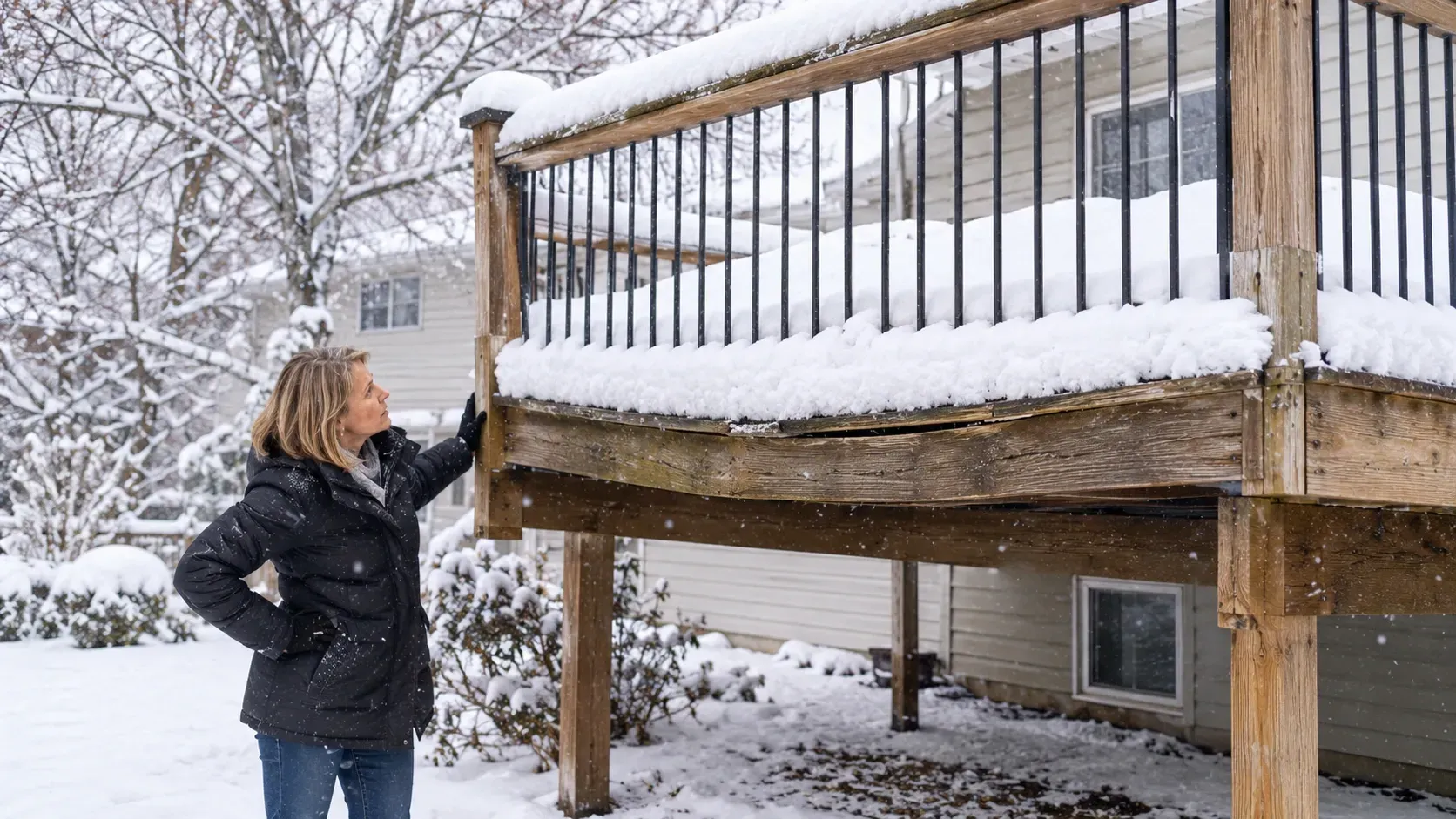
A deck under significant load may show gradual deflection, meaning a slight downward bow in the boards or framing, before any dramatic failure occurs. This gradual pattern is part of why periodic visual checks during a heavy snow season are more useful than assuming a deck is fine simply because it has not failed yet.
Warning Signs Worth Taking Seriously
Sagging or bowing in the deck surface, cracking or popping sounds when walking on the deck, visible gaps opening up where the deck meets the house, and doors or windows near the deck connection that suddenly become difficult to open are all signs that warrant prompt attention. These symptoms suggest the structure may be under more stress than it is designed to handle. A regular deck maintenance routine makes these early signs easier to catch before a heavy snow season begins.
A Decision Framework for Managing Snow on Your Deck
Rather than guessing whether a deck needs snow removal, working through the following steps provides a more structured approach.
- Assess the deck's age and history. Older decks or those without known permit history carry more uncertainty.
- Consider recent weather patterns. Repeated snowfall, rain on snow, or freeze-thaw cycles increase weight faster than a single dry snowfall.
- Look for visible warning signs. Sagging, cracking sounds, or shifting at connection points should prompt immediate action.
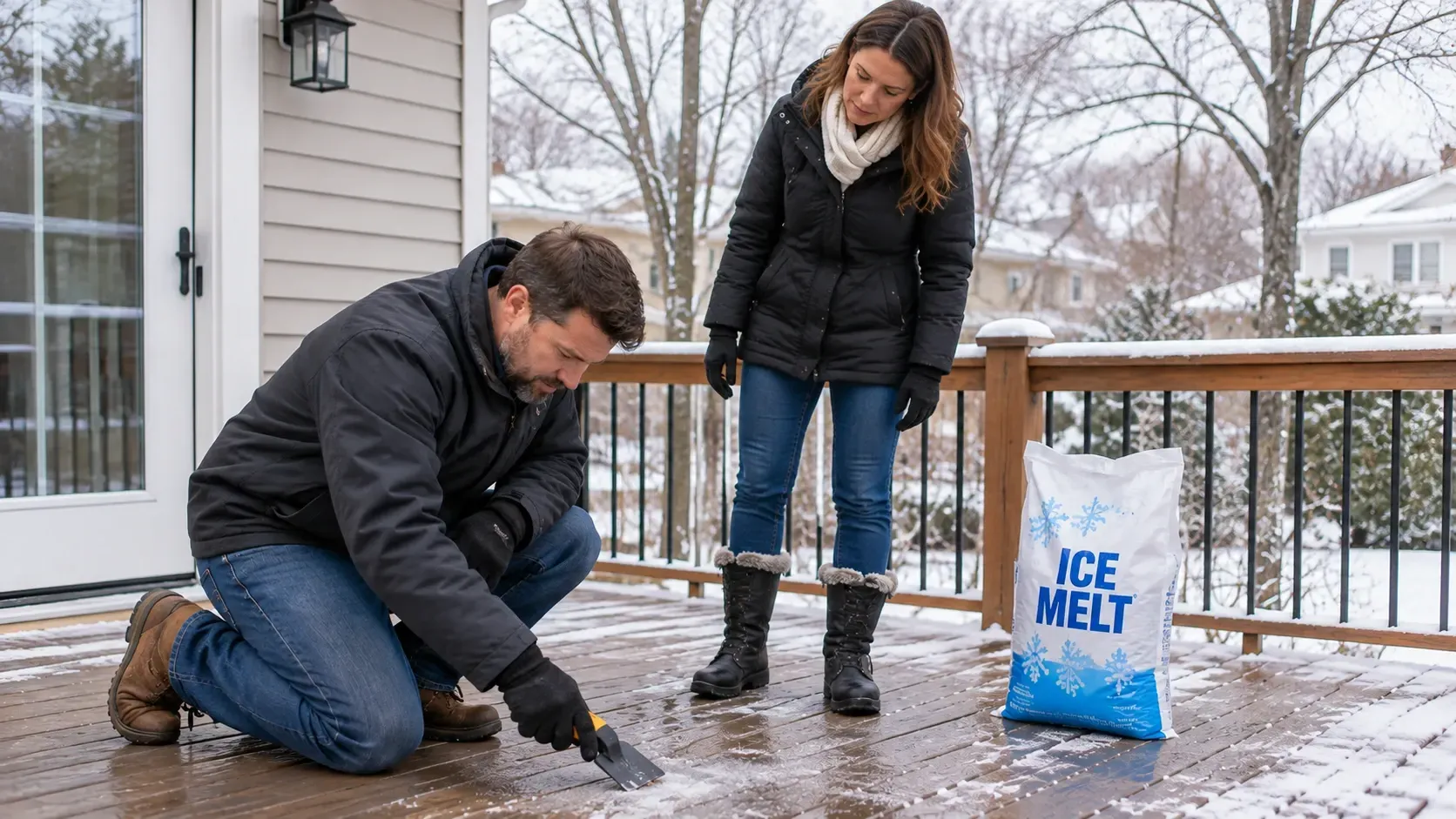
- Remove snow using safe methods. A plastic shovel used carefully, working from the top layer down, reduces weight without risking damage to the deck surface.
- Avoid piling removed snow on the deck itself. Moving cleared snow off the structure entirely prevents it from adding concentrated weight in one area.
- Consult a structural professional for uncertainty. If a deck shows any warning signs or has an unclear construction history, a professional assessment is the appropriate next step.
Common Misunderstandings About Deck Snow Load
More inches of snow always means more risk
This assumption overlooks moisture content. A relatively shallow layer of wet, compacted snow can weigh more than a much deeper layer of dry powder, so depth alone is an unreliable indicator of actual structural stress.
If the deck has handled snow before, it will always be fine
Previous winters without incident do not guarantee future performance, especially if the deck has aged, experienced fastener corrosion, or sustained hidden wood decay since the last heavy snow season. Structural capacity can decline gradually over time without obvious visible signs.
A Realistic Scenario: Two Decks, One Snowstorm
The following scenario is hypothetical and intended to illustrate how deck condition affects risk during the same weather event, not to describe an actual client or project.
One deck, built within the last several years to current code and properly maintained, holds a heavy wet snowfall without any visible issues, aside from the homeowner choosing to clear some snow for convenience rather than necessity. A second deck nearby, built decades earlier and never inspected for wear, develops a noticeable sag near the ledger board connection during the same storm, prompting a structural review that reveals corroded fasteners and early-stage wood decay.
Both decks experienced the same snowfall, but their outcomes differed based on age, condition, and maintenance history rather than the weather event itself. This illustrates why a deck's individual condition matters more than a general snow load guideline.
What Typical Online Advice Overlooks
Many general guides state a single snow depth figure, such as a specific number of inches, as a universal threshold for concern. This approach ignores that snow weight varies dramatically based on moisture content, which means the same depth can represent very different levels of structural stress depending on the type of snow involved.
Generic advice also tends to treat all decks as equally capable of handling a given load, without accounting for age, permit history, or visible wear. A deck built to current code in good condition has a different risk profile than an older deck with unknown structural history, even if both appear similar at first glance.
Finally, most online resources do not address how to clear snow safely without damaging the deck surface itself, treating snow removal as a simple task rather than one that benefits from some care around tool choice and technique, particularly on composite or sealed wood surfaces.
Risks, Limitations, and Trade-Offs of Snow Removal
Clearing snow reduces structural load, but removal itself carries some risk if done carelessly, including surface scratches from metal shovels or strain from attempting to remove heavy, compacted snow all at once. Using a plastic shovel and working in manageable layers generally reduces this risk.
This can depend heavily on the specific deck's surface material and current condition, since composite decking, sealed wood, and older weathered wood may respond differently to aggressive snow removal methods. A deck already showing warning signs should be approached cautiously, and in some cases professional evaluation before continued snow accumulation is a more appropriate response than removal alone.
It is also worth noting that general guidance in this article describes common patterns and should not replace an actual structural assessment for a specific deck, particularly one with unknown age, permit status, or visible signs of wear.
Conclusion
Snow becomes a meaningful risk to a deck based on accumulated weight rather than visible depth, and that weight depends heavily on moisture content, compaction, and how the snow has interacted with freeze-thaw cycles. A deck's age, original design load, and current condition all affect how much margin it has before heavy snow becomes a genuine structural concern.
Paying attention to warning signs like sagging, unusual sounds, or shifting connection points, and clearing snow carefully when accumulation becomes significant, offers a more reliable approach than relying on a single depth-based rule of thumb.
Concerned About Snow Load on Your Shorewood Deck?
This article is meant to help homeowners and business owners in the Shorewood, WI area understand how deck snow load risk generally works before a heavy winter sets in. If you have questions about your deck's age, condition, or general maintenance needs, you can
contact us to talk through what you are seeing and get guidance suited to your specific structure. This is offered as general information to support your decision-making, not a sales pitch.
Frequently Asked Questions
How many inches of snow are too many for a deck?
There is no single safe depth, since snow weight depends on moisture content and compaction. Wet or compacted snow can create significant load at a much shallower depth than dry powder.
What are the warning signs that a deck is under too much snow load?
Sagging or bowing in the deck surface, cracking or popping sounds, visible gaps at the house connection, and doors or windows near the deck becoming difficult to open are signs worth taking seriously.
Is it safe to shovel snow off a deck myself?
Generally yes, using a plastic shovel and working in manageable layers. Avoid metal shovels that can scratch the surface, and never pile removed snow back onto the deck.
Do older decks have a lower snow load capacity?
Often, yes. Decks built before certain code updates, or those with corroded fasteners or wood decay, may have reduced structural capacity compared to their original design load.
How do I know my deck's actual snow load capacity?
Reviewing original construction documents or consulting a structural professional is the most reliable way to understand a specific deck's design load and current condition.
Explore More Blogs