Should You Repair or Rebuild Your Deck? Here's How the Costs Compare
Table of Contents
- Introduction
- Understanding the Problem
- How Professional Deck Assessment Helps
- Benefits of Choosing the Right Option
- Related Insights and Resources
- Common Mistakes to Avoid
- When Should You Speak With a Professional?
- Conclusion
- Need Help Working Out Your Deck Repair vs Rebuild Costs?
- Frequently Asked Questions
Key Takeaways
- Deck repair vs replacement cost typically depends on the extent of structural damage rather than just surface appearance.
- Minor repairs in Milwaukee usually fall in the few-hundred to low-thousand dollar range, while a full rebuild often represents a much larger investment.
- The cost to rebuild a deck can sometimes offer better long-term value if your existing structure has multiple issues.
- Wisconsin's freeze-thaw cycles can hide structural problems beneath a deck that looks fine on the surface.
- Knowing when to repair or replace a deck comes down to age, foundation condition, and how the damage is distributed.
Introduction
Deck repair vs replacement cost usually comes down to one question: is the damage isolated, or has it spread through the structure? If you're weighing your options for deck building in Milwaukee, understanding where repairs end and rebuilds begin can save you money and prevent repeat problems down the track.
Understanding the Problem
Milwaukee homeowners often notice the same warning signs each spring after a long winter: boards that feel spongy underfoot, railings that wobble more than they used to, or gaps where fasteners have pulled loose. These issues can look cosmetic, but they're frequently symptoms of something happening underneath.
Common concerns include:
- Soft or discoloured boards (often a sign of moisture damage)
- Loose or rusted fasteners
- Railings that move when leaned on
- Visible gaps between the deck and the house (ledger board separation)
- Uneven or sagging sections
Why it matters: A deck that looks 80% fine but has a compromised ledger board or rotting support post isn't a "minor repair" situation — it's a safety issue. Wisconsin's freeze-thaw cycle is particularly tough on decks, as moisture trapped in joints expands and contracts repeatedly, accelerating wear in places you can't easily see.
For example, a homeowner might budget for replacing a few visibly damaged boards, only to discover during the work that the joists underneath have also deteriorated. At that point, the original "repair" estimate no longer reflects what the deck actually needs.
How Professional Deck Assessment Helps
The Inspection Process
A proper assessment looks beyond the surface. This typically involves checking the ledger board connection, testing joists and posts for soft spots, examining footings for movement or frost heave, and reviewing the overall age and condition of the structure relative to Milwaukee's climate.
Repair vs Rebuild: What Determines the Decision?
Repairs are usually appropriate when:
- Damage is limited to a small number of boards or balusters
- The frame, posts, and footings are structurally sound
- The deck is relatively young (under 10-15 years) with isolated wear
A rebuild is often the better path when:
- Multiple structural components show deterioration
- The deck is older and built to outdated code requirements
- Footings have shifted or frost heave has affected the foundation
- The cost of cumulative repairs starts approaching rebuild costs
Industry Best Practice
A common guideline in the industry is that if repair costs exceed roughly 50% of what a rebuild would cost, a rebuild often provides better long-term value — though this varies depending on the specific structure and the homeowner's plans for the property.
Benefits of Choosing the Right Option
Safety: Addressing structural issues at their source — rather than patching symptoms — reduces the risk of future failures, particularly important for elevated decks or those supporting hot tubs or large gatherings.
Performance: A rebuilt deck can be designed to current building codes, which may include updated railing heights, footing depths suited to Wisconsin's frost line, and improved ledger flashing.
Longevity: Repairs to an ageing structure often address one issue while others continue developing. A rebuild resets the clock on the entire structure.
Efficiency: While a rebuild has a higher upfront cost, it can reduce the frequency of repeat repairs over the following years.
Convenience: Knowing your deck has been comprehensively addressed — rather than wondering what else might surface next season — offers peace of mind for homeowners planning to use their outdoor space regularly.
Related Insights and Resources
Choosing materials is closely tied to this decision. If you're leaning toward a rebuild, it's worth reviewing how
composite vs wood decking compares for Milwaukee conditions, as material choice significantly affects both upfront cost and long-term maintenance.
Maintenance tips that can extend the life of an existing deck:
- Reapply sealant or stain every 1-2 years for wood decks
- Keep gaps between boards clear of debris to prevent moisture retention
- Inspect fasteners annually, particularly after winter
- Check that gutters and downspouts direct water away from the deck structure
A common misconception is that a fresh coat of stain or replacing a few boards "fixes" a deck long-term. Cosmetic work can improve appearance without addressing underlying structural wear, which means problems may resurface within a year or two.
PVC and Plastic Decking
PVC decking is a fully synthetic material designed for high moisture resistance.
Benefits
- Does not absorb water
- Resistant to mold and mildew
- Minimal maintenance required
Considerations
- Can look less like natural wood
- May expand or contract with temperature changes
- Typically higher material cost
This option is suitable for environments with frequent exposure to moisture.
Common Mistakes to Avoid
- Assuming surface-level repairs address structural issues underneath
- Skipping an inspection of the ledger board, which is one of the most critical (and most overlooked) connection points
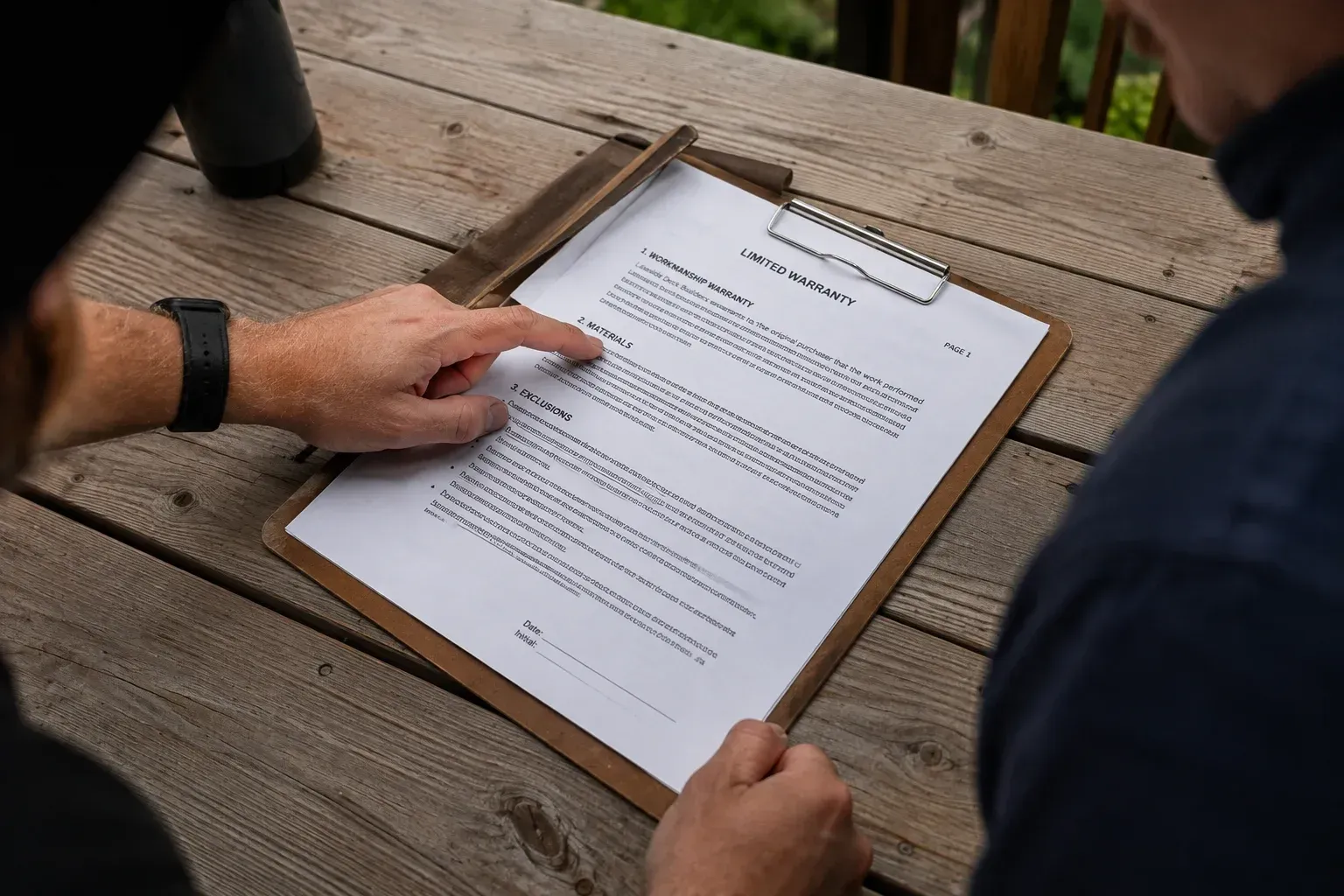
- Choosing the cheapest repair quote without understanding what it does and doesn't cover
- Ignoring footing condition, especially on older decks built before current frost-depth standards
- Ad-hoc DIY repairs that don't account for how the deck's components work together structurally
Conclusion
Working out deck repair vs replacement cost isn't always straightforward, since the visible condition of a deck doesn't always reflect what's happening structurally. Isolated, surface-level damage on a relatively young deck often points toward repair, while multiple issues, an ageing structure, or foundation concerns tend to make a rebuild the more practical long-term choice. Considering both the immediate cost and how the decision affects the deck's lifespan can help homeowners arrive at a decision that suits both their budget and their plans for the space.
Need Help Working Out Your Deck Repair vs Rebuild Costs?
If you're trying to figure out whether your Milwaukee deck needs a repair or a full rebuild, an on-site assessment can give you a clearer picture of what's involved and what it might cost. Our team can walk through your deck, point out what we find, and help you understand your options without any pressure to go one direction or another. Feel free to reach out via email at
lakesidecontractingmke@gmail.com or call
262-221-4321 to arrange a time that works for you.
Frequently Asked Questions
How do we know if our deck's problem is structural rather than cosmetic?
Soft spots underfoot, movement in railings, or gaps near the house often indicate structural concerns. An inspection can confirm what's affecting the frame versus the surface.
Is it ever cheaper to rebuild than keep repairing an old deck?
Yes, if repair costs are adding up year after year, a rebuild can sometimes work out more cost-effective over time than ongoing patch repairs.
Does the age of our deck affect whether repair or replacement makes more sense?
Generally yes. Decks over 15-20 years old often have multiple ageing components, which can make a rebuild more practical than repairing each issue separately.
Can we get a quote for both repair and rebuild options before deciding?
Many assessments can outline both pathways, giving us the cost details for each so we can compare and choose what suits our budget and timeline.
Will Milwaukee winters affect how soon our deck might need attention?
Freeze-thaw cycles can accelerate wear on fasteners, footings, and joints, so decks in our climate may need attention sooner than in milder regions.
Explore More Blogs